
Nuclear Holocaust
Surviving an acute nuclear detonation and the catastrophic aftermath demands immediate mass shielding, rapid decontamination, and unwavering shelter discipline. Radioactive fallout decays rapidly under exponential half-life kinetics, meaning your immediate physical posture and sheltering density in the first 48 hours will decide long-term survival.

Critical Field Directives
- Subterranean shelter & 48-hour fallout decay
- Outer garment decontamination & hygiene
- Emergency crank radio monitoring
- Mass shielding prioritization (earth, concrete, masonry)
Immediate Blast Response and Mass Shielding
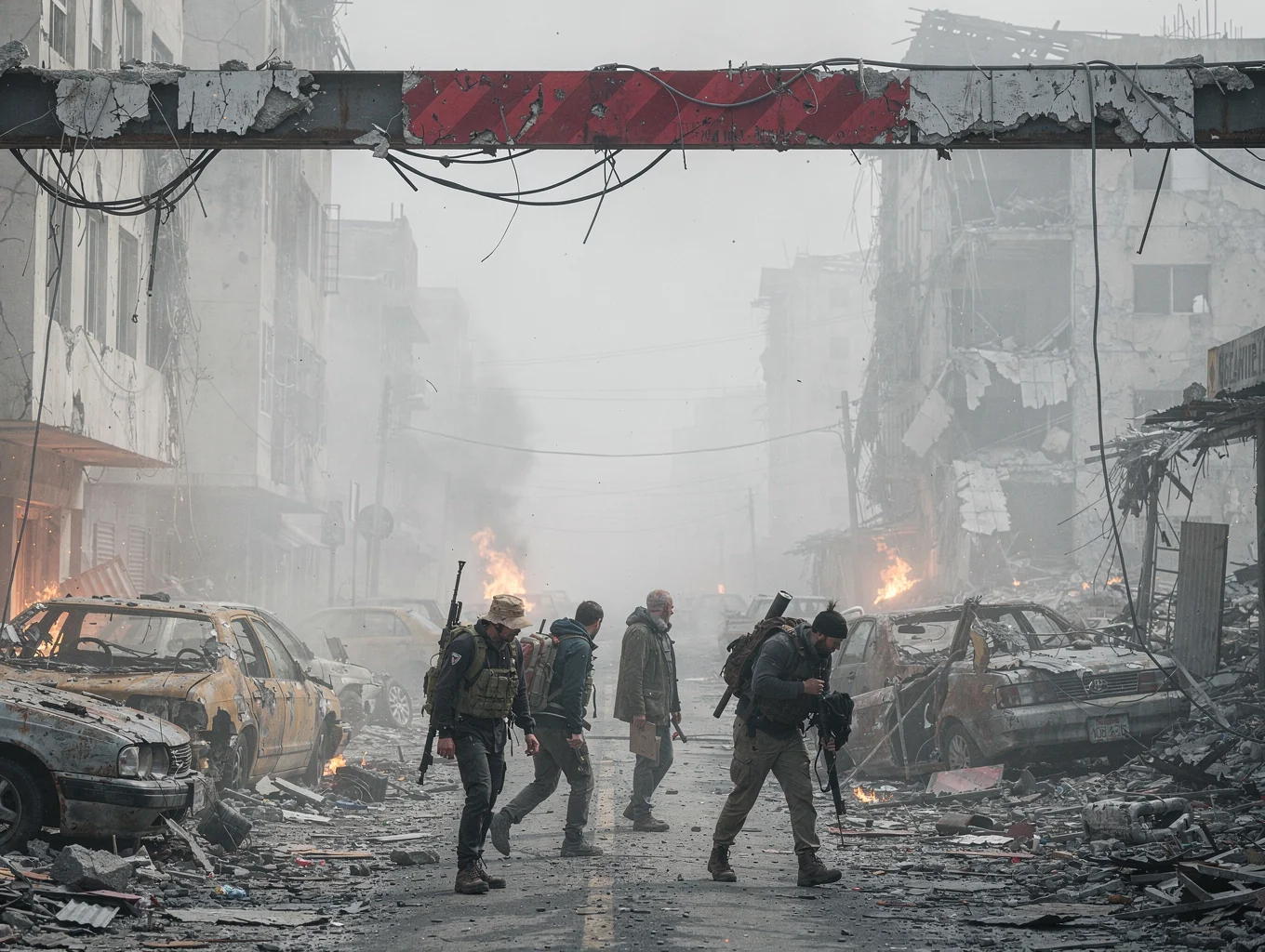
The first threat from a nuclear detonation is thermal radiation and supersonic blast overpressure. If an intense blinding flash is detected, drop prone immediately behind any available depression or solid structure, facing away from the blast origin, with hands protecting your neck and ears covered while keeping your mouth slightly agape to equalize barometric ear pressure.
Once the direct shockwaves pass, reaching substantial shielding before the arrival of particulate fallout is your single operational objective. The ideal protection factors come from dense barrier mass: thick concrete, packed earth, brick basements, or deep subterranean subways. Put as many walls, floors, and feet of dirt between yourself and the open atmosphere as possible.
- 1Take immediate cover prone to avoid thermal pulse flash burns and high-velocity window fragmentation.
- 2Move rapidly toward the lowest and most interior architectural space available—sub-ground basements or reinforced core hallways.
- 3Avoid exterior perimeter walls, high-level roofs, open skylights, and air duct intakes.
- 4Seal all fresh-air intake louvers, furnace dampers, and external ventilation portals before fallout particles settle.
Fallout Physics and the 48-Hour Confinement Rule
Nuclear fallout consists of dirt, vaporized debris, and weapon residue sucked up into the radioactive plume and lofted downwind. These radioactive fission particles emit penetrating gamma rays. Radiation intensity follows the rule of sevens: for every sevenfold increase in elapsed time post-detonation, ambient radiation levels drop by roughly a factor of ten.
Confinement discipline during the initial 48 hours is non-negotiable. Exiting shelter too early to inspect damage or gather supplies exposes cellular tissue to lethal ionizing doses. Maintain absolute containment within your mass-shielded perimeter until official emergency broadcast channels explicitly confirm safe radiation thresholds.
Decontamination and Barrier Containment Protocol
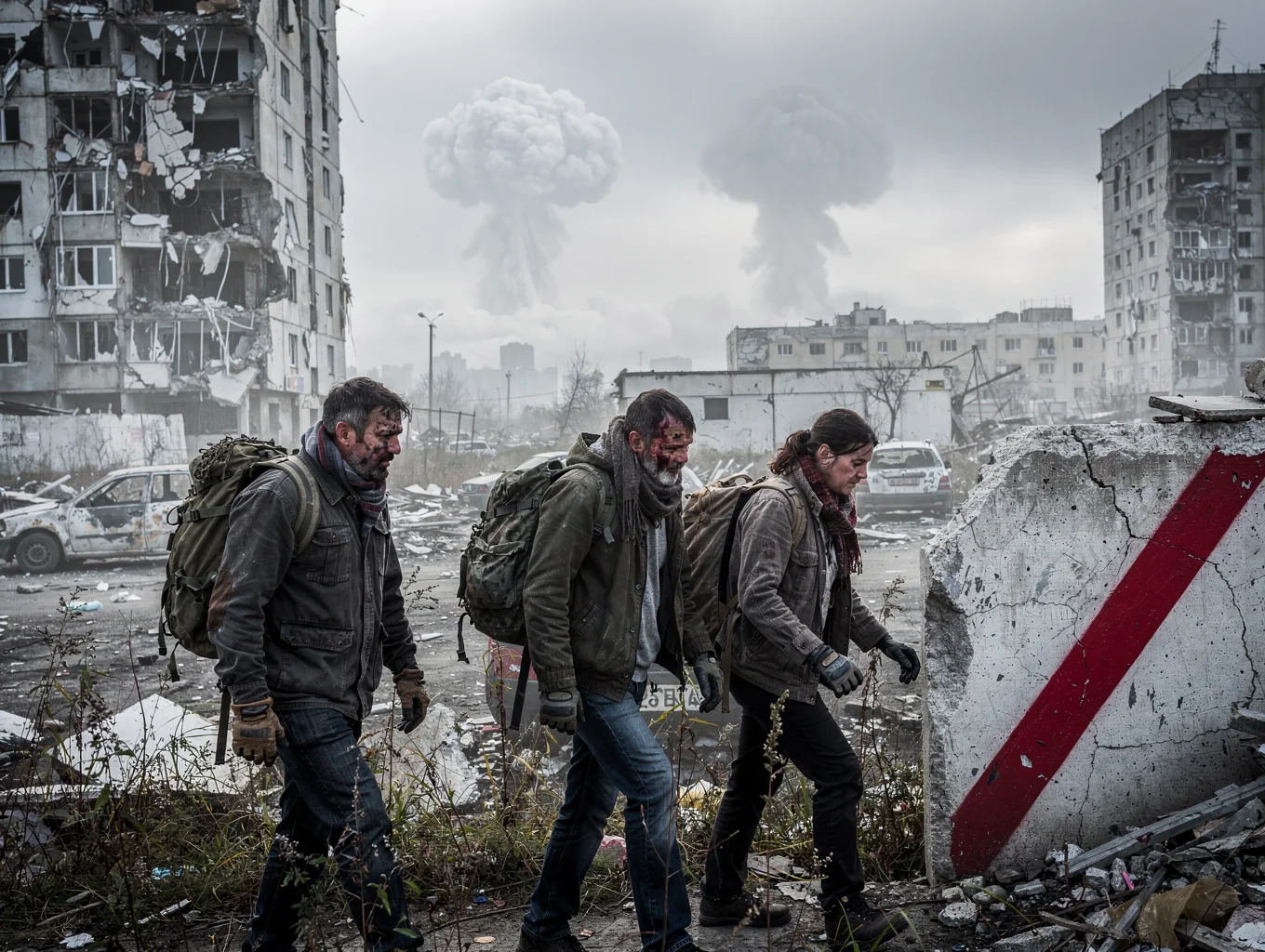
If you or family members were outdoors or in unsealed structures when fallout commenced, rigorous decontamination must occur at the threshold before crossing into the clean living quarters. The primary radiation hazard from fallout arrives on dust particles clinging to clothing, skin, and footwear.
Removing outer garments eliminates upwards of 90 percent of surface radioactive contamination. Wash exposed skin with clean running water and mild soap without scrubbing abrasively, which could break the dermal barrier and introduce radioactive particulates into the bloodstream.
- 1Establish an isolated staging vestibule at the entryway before stepping into primary living quarters.
- 2Gently peel off contaminated outerwear, rolling garments inward to trap surface dust, and seal them in heavy-gauge contractor bags.
- 3Thoroughly wipe skin, hair, and face with damp towelettes or clean running water, blowing nostrils and rinsing eyelids gently.
- 4Don clean spare clothing stored in airtight plastic containers and step across the clean shelter threshold.
Sustenance, Potable Water, and Civil Defense Monitoring
Internal radiation contamination occurs through the ingestion of irradiated dust or radioiodine-tainted milk and water. Never consume open water supplies, collected rainwater, or unsealed food that was exposed to the outdoor atmosphere following the detonation. Consume strictly canned goods, MREs, sealed shelf-stable rations, and pre-staged potable water containers stored deep within the shelter.
Regarding thyroid protection pharmaceuticals such as potassium iodide (KI): ingest potassium iodide strictly under explicit direction from state or national civil defense public health authorities. Inappropriate self-administration can lead to adverse metabolic effects without addressing broader whole-body gamma radiation exposure.
Maintain total acoustic discipline and monitor battery or hand-crank civil defense emergency radio frequencies (AM/FM and NOAA weather alert bands) continuously. Coordinate movement only when emergency authorities issue localized safe egress windows and decontamination corridors.
Essential Nuclear Fallout Readiness Kit
- Minimum 1 gallon of bottled potable water per person per day for 14 days
- Sealed, non-perishable canned food and manual can openers
- Hand-crank and battery-powered emergency broadcast radio with spare cells
- Potassium iodide (KI) tablets staged for official public health authorization
- Heavy-duty contractor plastic trash bags, duct tape, and shears for vestibule containment
- Disposable N95 or P100 particulate respirators and safety eyewear
- Personal dosimeter or radiation detection meter for localized dose-rate monitoring
More Guides in this Series
Standard operational protocol & readiness briefing.
Standard operational protocol & readiness briefing.
Standard operational protocol & readiness briefing.
Standard operational protocol & readiness briefing.
Standard operational protocol & readiness briefing.