
Earthquake Survival Guide
Severe seismic events strike without preliminary tactical warning, shifting terrain and collapsing non-reinforced civilian architecture in seconds. A calculated gray-man survival doctrine relies on proactive structural mitigation, reflexive immediate cover mechanics, and decentralized communication plans that operate when municipal infrastructure fails.
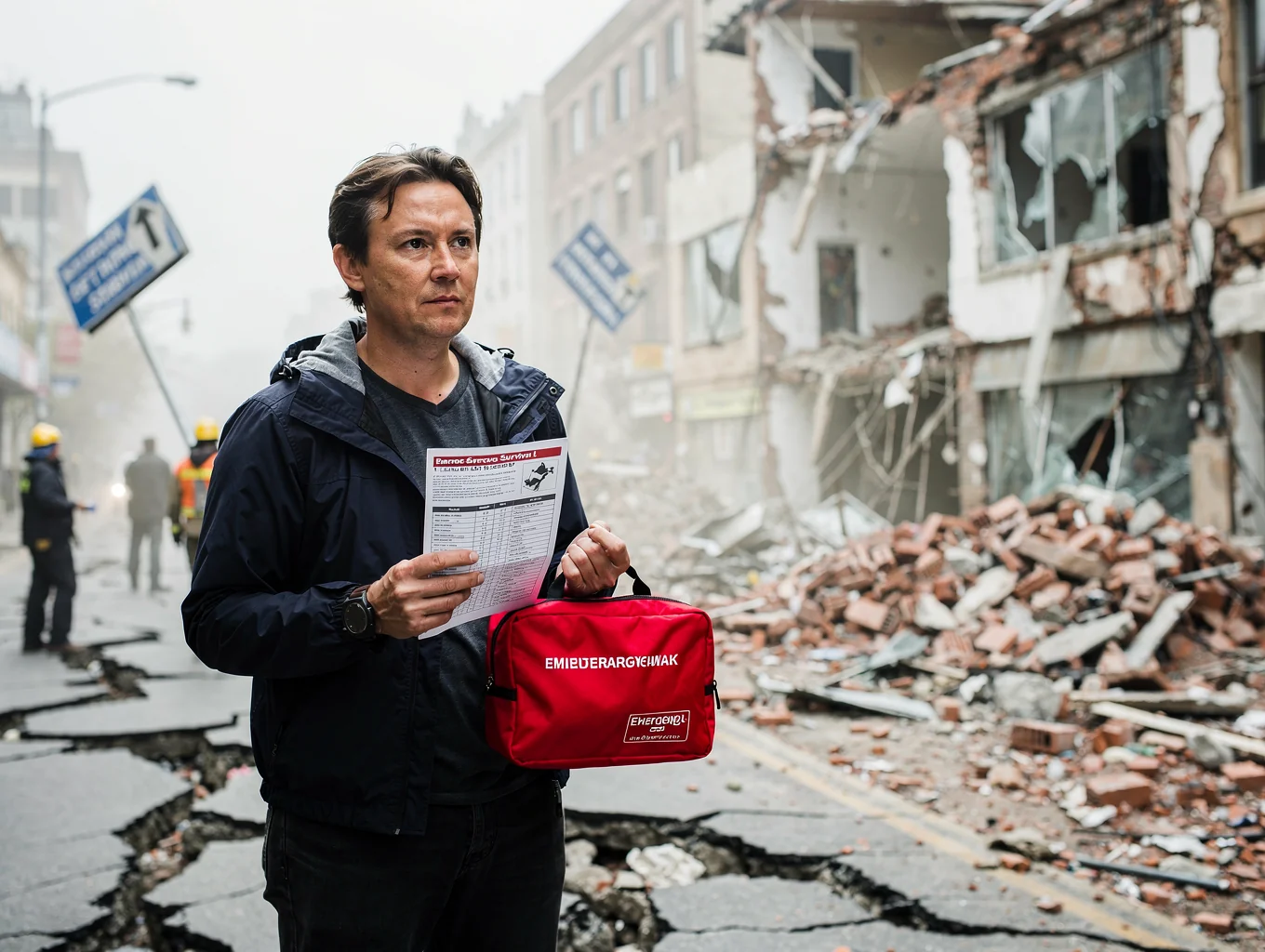
Critical Field Directives
- Anchor tall furniture, water heaters, and heavy shelving directly to load-bearing wall studs ahead of time.
- Master the drop, cover, and hold protocol under load-bearing furniture away from perimeter glass windows.
- Shut off natural gas lines immediately if you detect the distinct mercaptan odor or hear hissing.
- Stage off-grid communications and analog meeting points outside dense structural collapse corridors.
Structural Hardening & Workspace Assessments
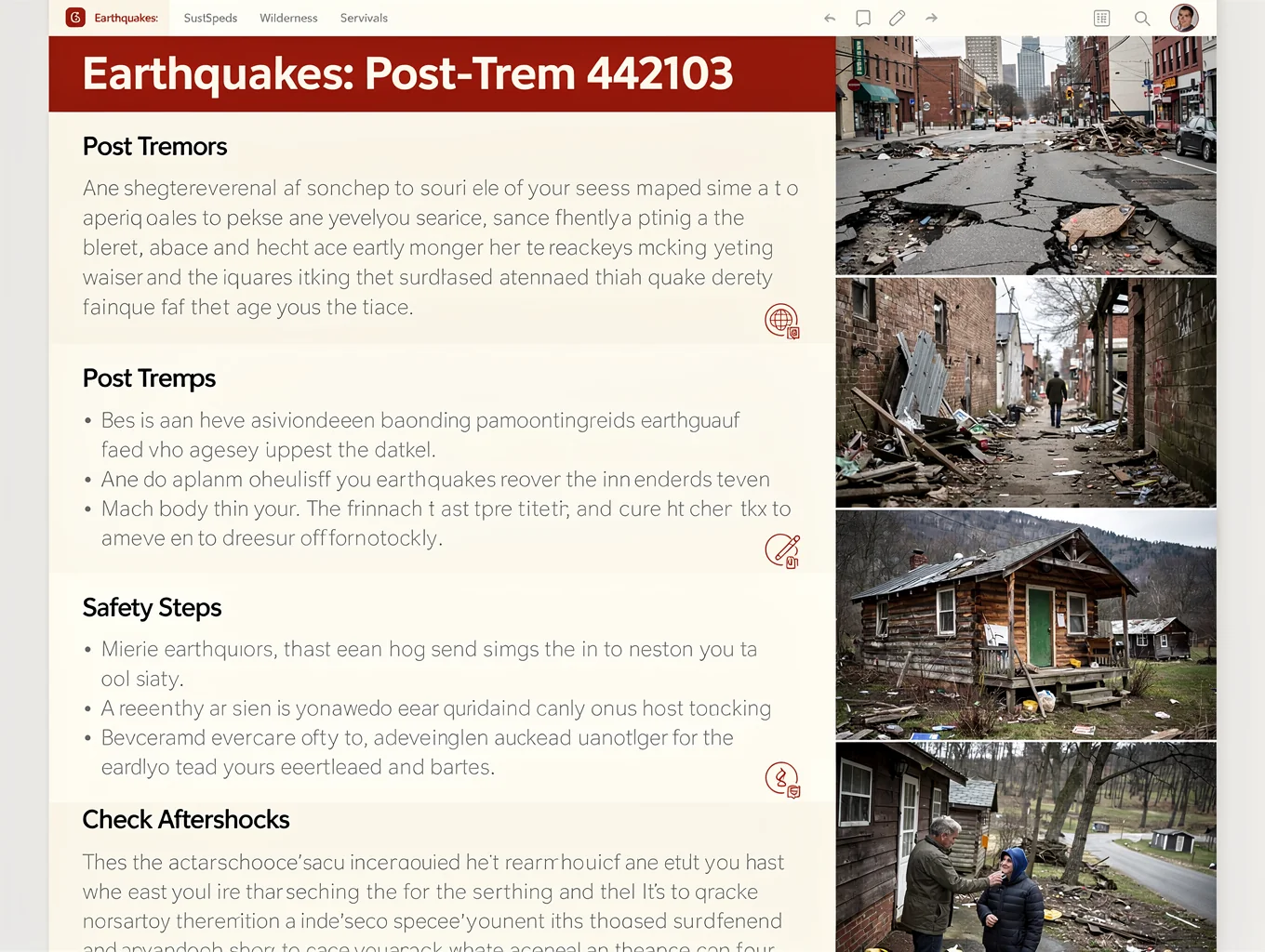
Most seismic casualties result not from ground fissures, but from non-structural building elements falling overhead. Heavy storage cabinets, flat-panel displays, and free-standing shelving units turn into immediate blunt-force hazards during horizontal shockwaves. Routine room-by-room hardening significantly decreases personal injury risk and preserves primary evacuation corridors.
Inspect critical utility shutoffs across your residential and workspace perimeters. Gas, water, and electrical mains must feature dedicated, non-sparking shutoff wrenches staged adjacent to each valve, accessible even in pitch-black conditions or dense drywall dust.
- 1Locate wall studs using a magnetic or electronic sensor and secure heavy shelving with steel L-brackets and lag bolts.
- 2Install flexible braided stainless-steel utility connectors on water heaters and gas-fed appliances.
- 3Fit overhead cabinet doors with positive-locking marine latches to prevent contents from spilling across egress paths.
- 4Secure tall electronics, bedside mirrors, and hanging picture frames using heavy-duty vibration dampeners or safety anchors.
Reflexive Response: Drop, Cover, and Hold Mechanics
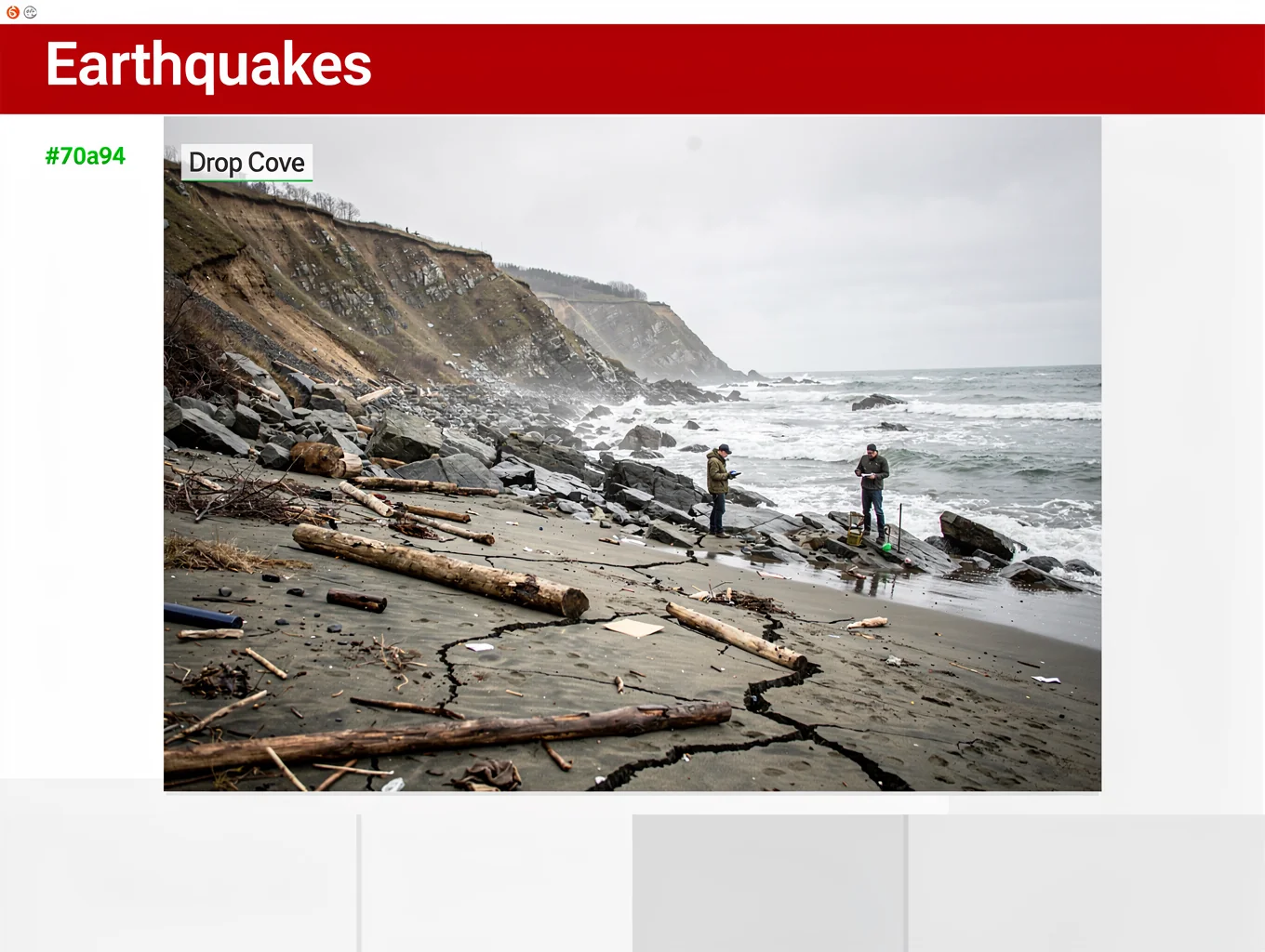
When ground acceleration begins, attempting to run outside through rolling entryways exposes you to falling facade masonry, shearing glass, and downed high-voltage lines. Survival statistics demonstrate that remaining indoors and shielding your cranium and torso is the optimal protocol until primary shaking ceases.
If you are caught inside a modern high-rise or commercial office, avoid stairwells and elevator shafts until structural integrity can be verified. Stay low to minimize the chance of being thrown off balance, and maintain a compact posture to reduce your exposure profile.
- 1Drop to hands and knees immediately before ground displacement knocks you down.
- 2Cover your head and neck with one arm and hand while seeking shelter under a heavy desk, table, or sturdy workbench.
- 3Hold onto your shelter with your free hand and prepare to move with it as violent ground oscillation shifts position.
- 4If shelter is unavailable, drop near an interior structural wall away from exterior glazing and shield your head with both arms.
Post-Tremor Hazard Mitigation & Evacuation

Aftershocks frequently compromise structures that survived the initial shockwave. Once violent displacement ceases, conduct a rapid 60-second assessment of your immediate perimeter. Check yourself and dependents for penetrating trauma, don thick-soled boots to protect against shattered glass, and prepare for rapid, organized egress.
Avoid striking matches, lighters, or activating electrical switches until you have definitively cleared the perimeter for ruptured gas mains. If structural compromise or gas odor is detected, immediately vent the structure, isolate the primary gas meter with a manual wrench, and vacate toward an open rendezvous point.
- 1Don sturdy tactical footwear and heavy gloves before stepping across debris or shattered glazing.
- 2Inspect natural gas meters and supply lines; shut off the supply valve only if leaks or damage are evident.
- 3Cut electrical mains at the breaker box if damaged wiring, sparks, or water leaks intersect utility conduits.
- 4Gather pre-staged grab-and-go evacuation packs and systematically exit using exterior stairwells, never elevators.
Off-Grid Family Communications & Staging Points

Cellular towers saturate instantly during major metropolitan earthquakes due to power grid failure and localized bandwidth choke. Relying on real-time voice calls will leave your family unit isolated. A resilient communication plan utilizes low-bandwidth asynchronous text messaging alongside predefined regional staging points.
Establish both a primary neighborhood rally point outside structural collapse perimeters and a secondary out-of-town staging location. Identify an out-of-state emergency contact who can serve as an informational switchboard between family members when local cell channels are overloaded.
- 1Designate an out-of-state family check-in contact whose local communications will remain unimpacted by regional tremors.
- 2Rely on asynchronous SMS or low-power analog FRS/GMRS two-way radio frequencies rather than voice calls.
- 3Pre-survey neighborhood meeting spots in open parks or sports fields completely clear of overhead power lines and brick facades.
- 4Keep laminated analog topographic maps in your go-bag highlighting alternate vehicular and foot-egress routes.
Essential Earthquake Readiness Gear
- Dedicated steel gas & water shutoff wrench staged directly at main meters
- Heavy-duty leather work gloves and puncture-resistant work boots near bedsides
- Emergency particulate N95 or P100 respirators for post-tremor concrete and drywall dust
- Multi-band hand-crank emergency radio with NOAA weather and civil alert bands
- Rugged LED headlamps and chemical light sticks (avoiding open flames during gas leaks)
- Compact pry bar and tactical multi-tool for clearing jammed doors and debris
- Sealed 72-hour potable water pouches and durable gravity water filtration kit
More Guides in this Series
Standard operational protocol & readiness briefing.
Standard operational protocol & readiness briefing.
Standard operational protocol & readiness briefing.
Standard operational protocol & readiness briefing.
Standard operational protocol & readiness briefing.
Standard operational protocol & readiness briefing.
Standard operational protocol & readiness briefing.