
Bushcraft
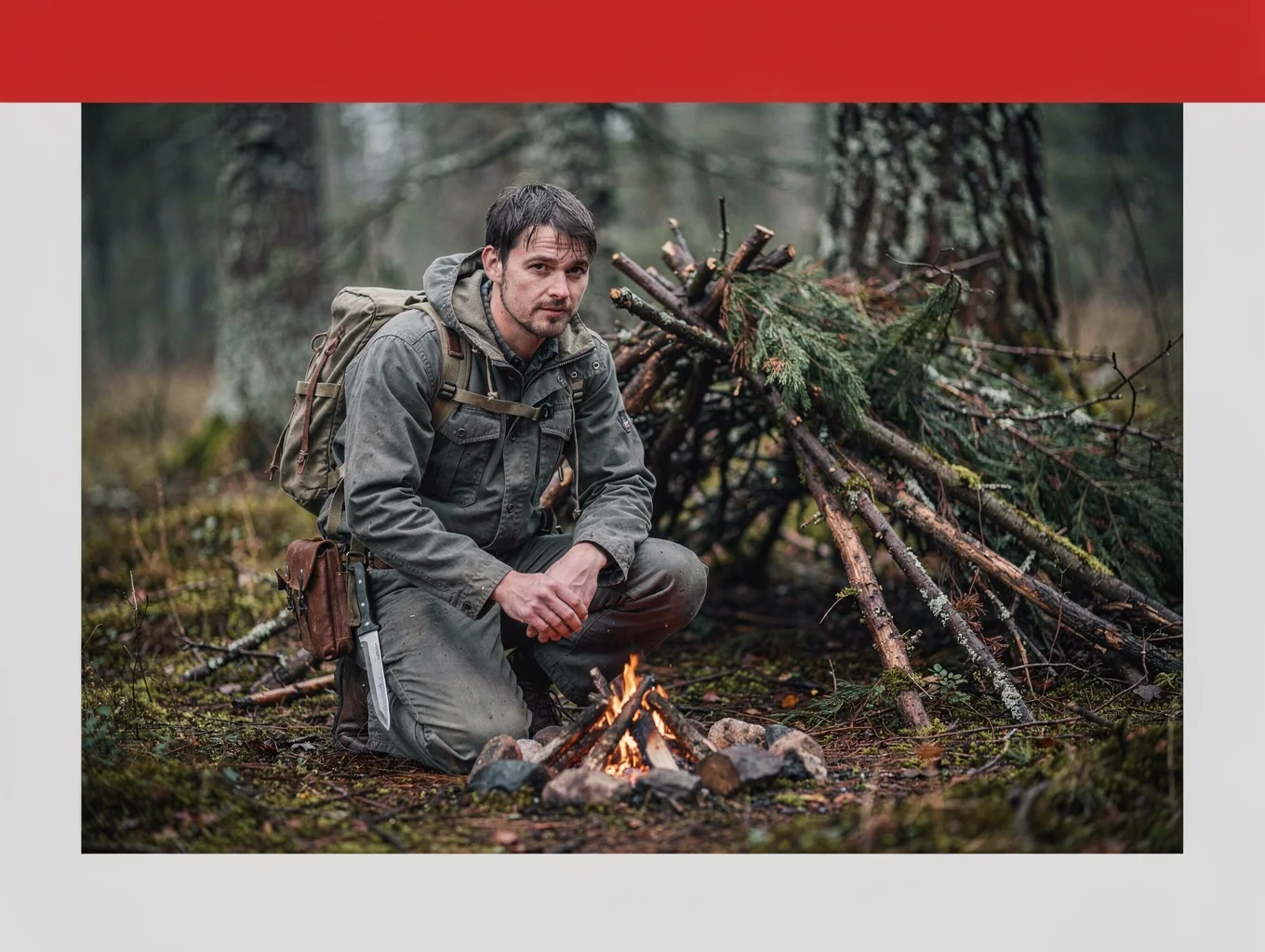
Bushcraft in a gray-man framework emphasizes self-reliance through low-signature wilderness tradecraft. By mastering terrain reading, harvesting natural materials without leaving overt evidence, fashioning field tools discreetly, and moving without a trace, you sustain life in austere woodland terrain while maintaining total operational discretion.
Critical Field Directives
- Prioritize non-destructive harvesting methods to leave no human signature or conspicuous woodland disturbance.
- Read topographical micro-features and animal behavior patterns to anticipate shifting weather, identify water, and spot perimeter movement.
- Harvest deadfall, inner barks, and natural resins for cordage and waterproofing rather than cutting living timber.
- Employ low-smoke friction methods and concealed thermal banks to preserve tactical light and thermal discipline.
- Adopt ghost-walking techniques and background-blending movement habits that eliminate silhouette detection and crushed vegetation trails.
Reading the Land: Terrain, Weather & Wildlife Sign
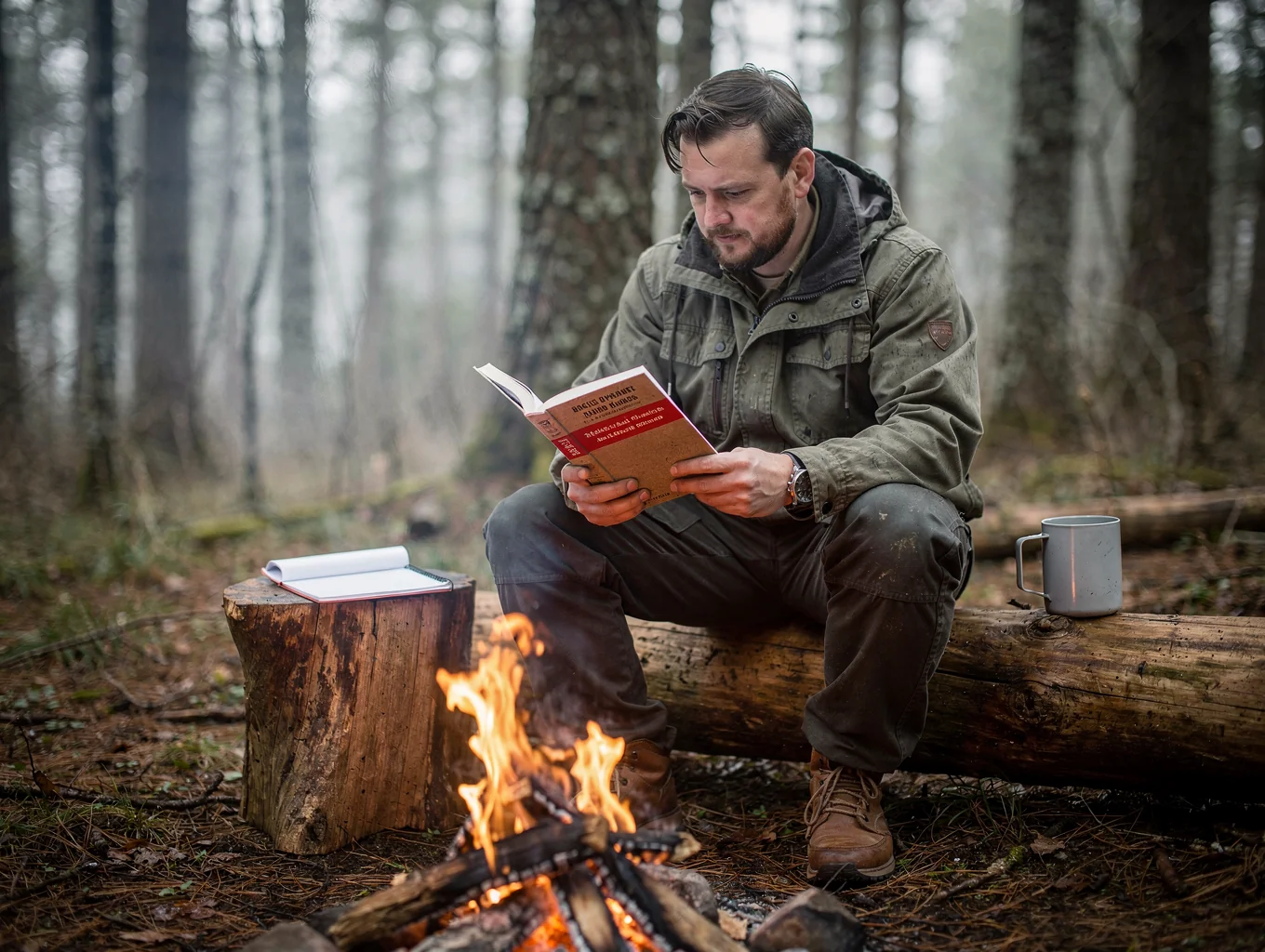
Sustained survival relies on understanding the environment's baseline rhythms before disturbing them. Landscapes communicate constant environmental intelligence: windward slopes dry out rapidly, lee draws trap dense cold air and mist, and subtle variations in flora signal changes in soil permeability and subsurface drainage.
Wildlife acts as an organic early-warning sensor network. Sudden silence in bird calls, erratic tree squirrel alarms, or deer flushing from a draw indicate approaching movement. By matching your pace to environmental ambient noise and monitoring cloud ceilings over high ridges, you anticipate severe frontal storms hours before barometric drop affects lowlands.
- 1Analyze micro-topography from concealed vantage points to map drainage, natural dead ground, and transit routes.
- 2Monitor bird sentinel calls and woodland cadence changes to detect perimeter disturbances or approaching humans.
- 3Track barometric shifts through cloud base descent, changing wind directions, and morning dew density.
- 4Identify animal bedding depressions and natural travel corridors along contour lines while avoiding direct entry.
Cordage & Natural Materials: Plant Fibers, Bark & Pitch Glue
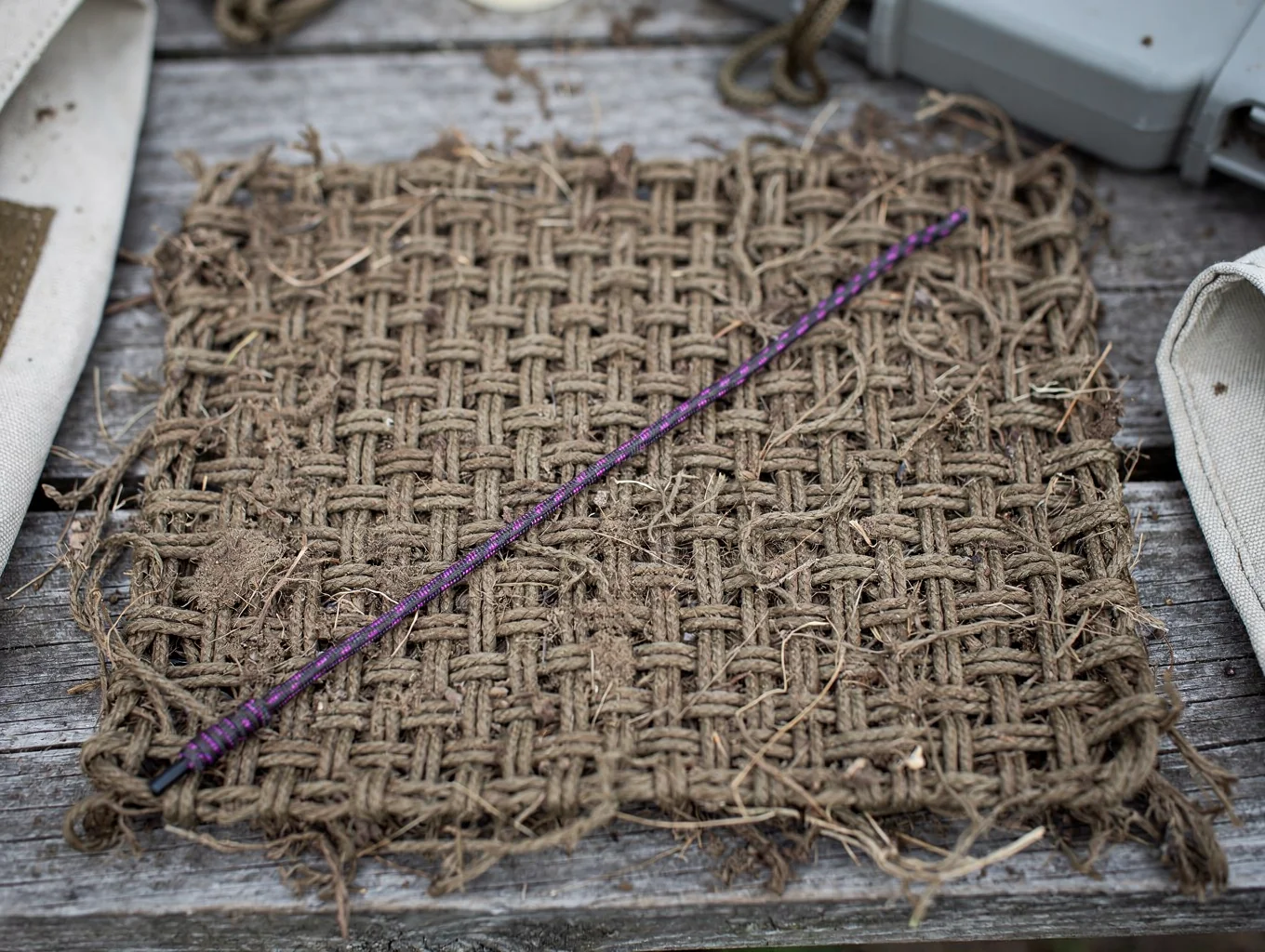
Carrying infinite synthetic rope is impossible, making natural binding materials essential for extended operations. Fibrous plant stems such as nettle, dogbane, milkweed, and the inner bast fibers of deadfall cedar or basswood yield exceptional tensile strength when processed through standard reverse-wrap cordage methods.
Adhesives and sealants can be improvised directly from coniferous timber without synthetic glues. Harvesting dried amber resin beads from pine wounds and melting them gently over low coals with crushed charcoal powder creates pine pitch glue—a durable, waterproof thermoplastic ideal for sealing seams, fletching, and securing lashing.
- 1Gather dry fibrous plant stalks or harvest the inner bast bark from naturally fallen hardwood branches.
- 2Thoroughly reprocess raw fibers by scraping off the outer pith and buffing the inner strands until supple.
- 3Execute a two-ply reverse-wrap twist, continually splicing in staggered fiber lengths to maintain uniform diameter.
- 4Melt hardened pine resin over low ember heat, stirring in powdered charcoal at a three-to-one ratio for resilient pitch glue.
Primitive Craft: Carving, Friction Fire Basics & Improvised Containers
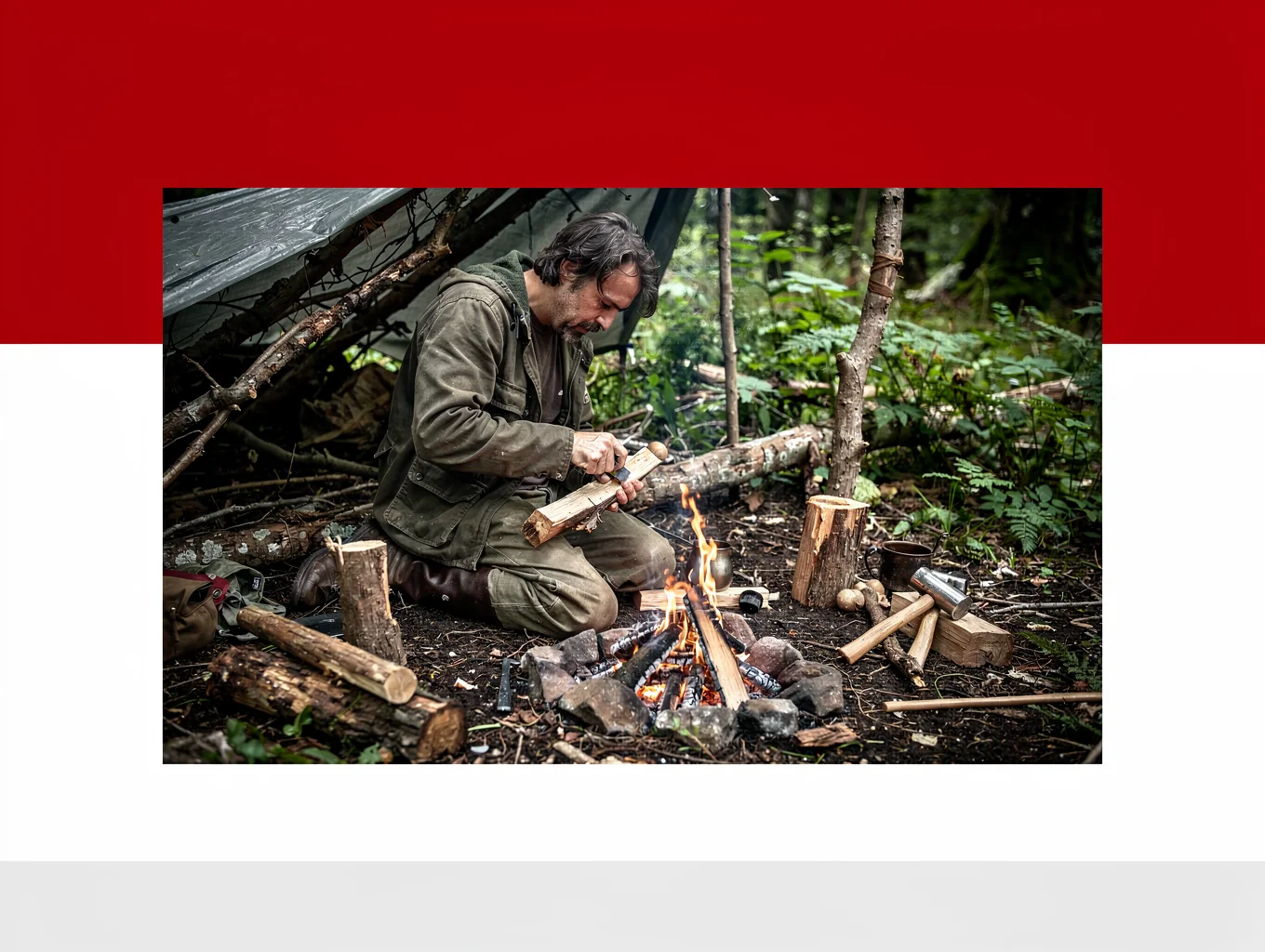
Low-signature bushcraft focuses on functional utility rather than elaborate camp construction. Improvised wooden tools, digging sticks, wedges, and cooking skewers should be carved using small draw strokes beneath canopy cover, scattering wood shavings onto forest duff to obscure evidence of occupation.
Friction fire methods—specifically bow drill and hand drill sets sourced from seasoned local deadwoods like cottonwood, willow, or cedar—allow ignition without commercial matches. When ignition is secured, coals are fed into birch bark or folded poplar containers for contained heat transfer without wide-flame exposure.
- 1Select dry, straight-grained softwood spindles and hearthboards from standing deadwood off the ground.
- 2Carve a uniform V-notch into the hearthboard to collect fine carbon dust as rotational friction builds.
- 3Direct the glowing ember into a compact tinder bundle of crushed inner cedar bark and buffed dried grass.
- 4Fashion watertight field containers by scoring and folding fallen birch bark sheets, sealing seams with pine pitch.
Tracking & Low-Impact Movement: Sign Reading & Total Concealment
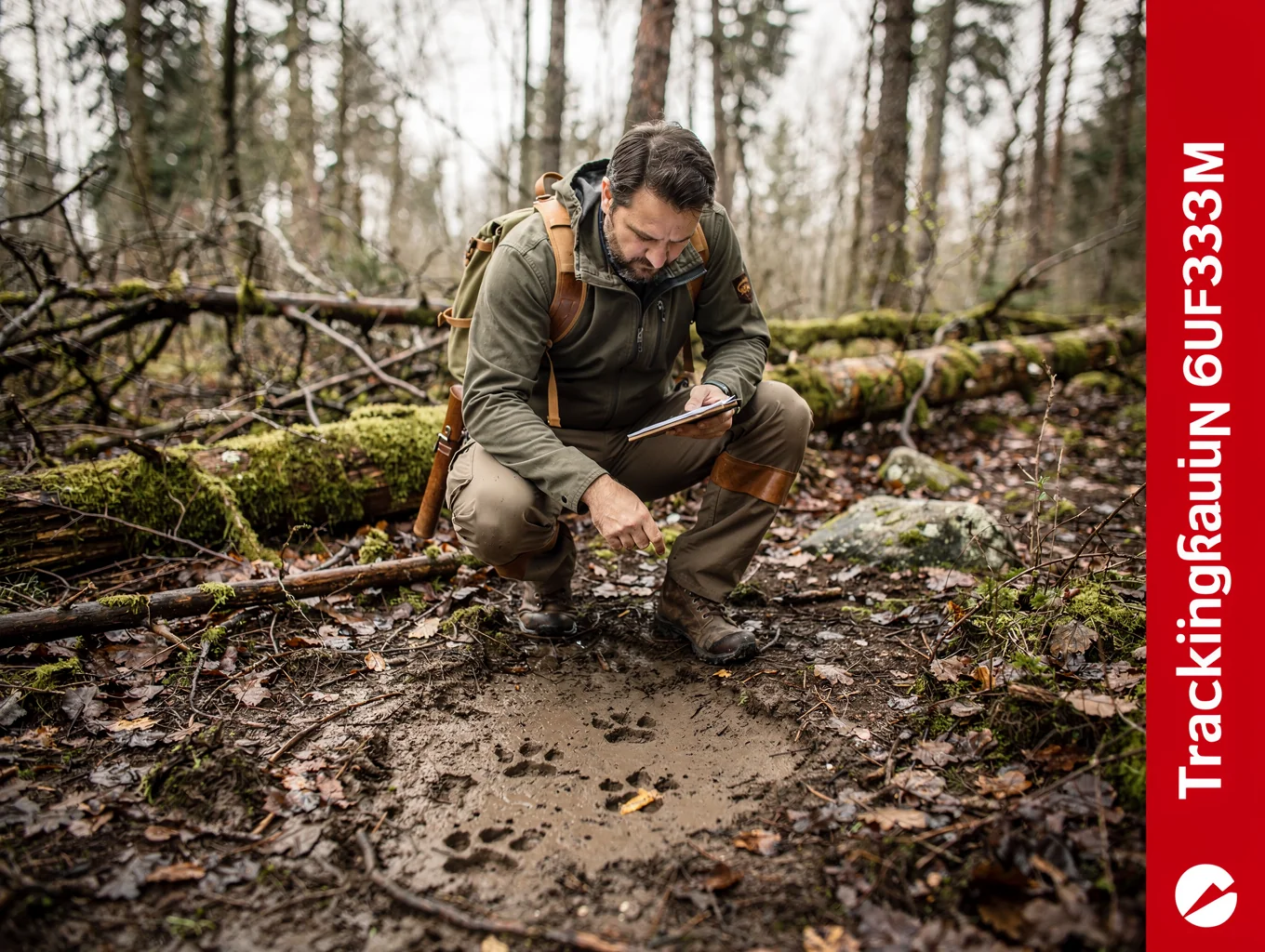
True gray-man woodland discipline means moving through rough territory as a ghost, leaving no crushed underbrush, broken branches, or visible boot tracks. Reading existing sign reveals whether an area is regularly traversed by humans or game, enabling you to use natural terrain masking such as dry creek beds and rocky ridges.
Employ low-impact gait mechanics by placing the outside ball of the foot down first, shifting weight smoothly only after ensuring no dry twigs crack beneath. Match clothing colors to the specific regional understory, break up human facial symmetry with natural dirt smudges, and avoid traversing exposed skylines or ridge peaks.
- 1Examine ground sign for compressed soil, brushed moss, scuffed leaf litter, and overturned pebbles.
- 2Advance using the fox walk: rolling footfalls gently from outer edge to heel to silence footsteps.
- 3Travel along natural military crests below prominent ridge tops to prevent silhouetting against open sky.
- 4Disguise momentary rest sites by fluffing packed duff, lifting bent grass stems, and leaving zero physical refuse.
Essential Bushcraft Field Kit
- Full-tang high-carbon steel fixed blade bushcraft knife with 90-degree spine
- Folding Japanese-tooth pocket saw for low-signature, quiet deadfall harvesting
- Ferrocerium sparking rod with hardened steel striker
- 100 feet of high-test 550 parachute cord or woven bank line
- Single-walled stainless steel canteen cup for boiling and resin melting
- Heavy-duty sailmaker needles and artificial sinew for field repairs
- Small metal tins with pre-charred natural cotton cloth for spark catching
More Guides in this Series
Standard operational protocol & readiness briefing.
Standard operational protocol & readiness briefing.
Standard operational protocol & readiness briefing.
Standard operational protocol & readiness briefing.
Standard operational protocol & readiness briefing.
Standard operational protocol & readiness briefing.
Standard operational protocol & readiness briefing.
Standard operational protocol & readiness briefing.