
Tools
Utilitarian hardware turns raw environment into shelter, fuel, and security. By selecting low-profile, multi-purpose implements that blend seamlessly into everyday carry while complying with local legal boundaries, you maintain field readiness without drawing unwanted attention.
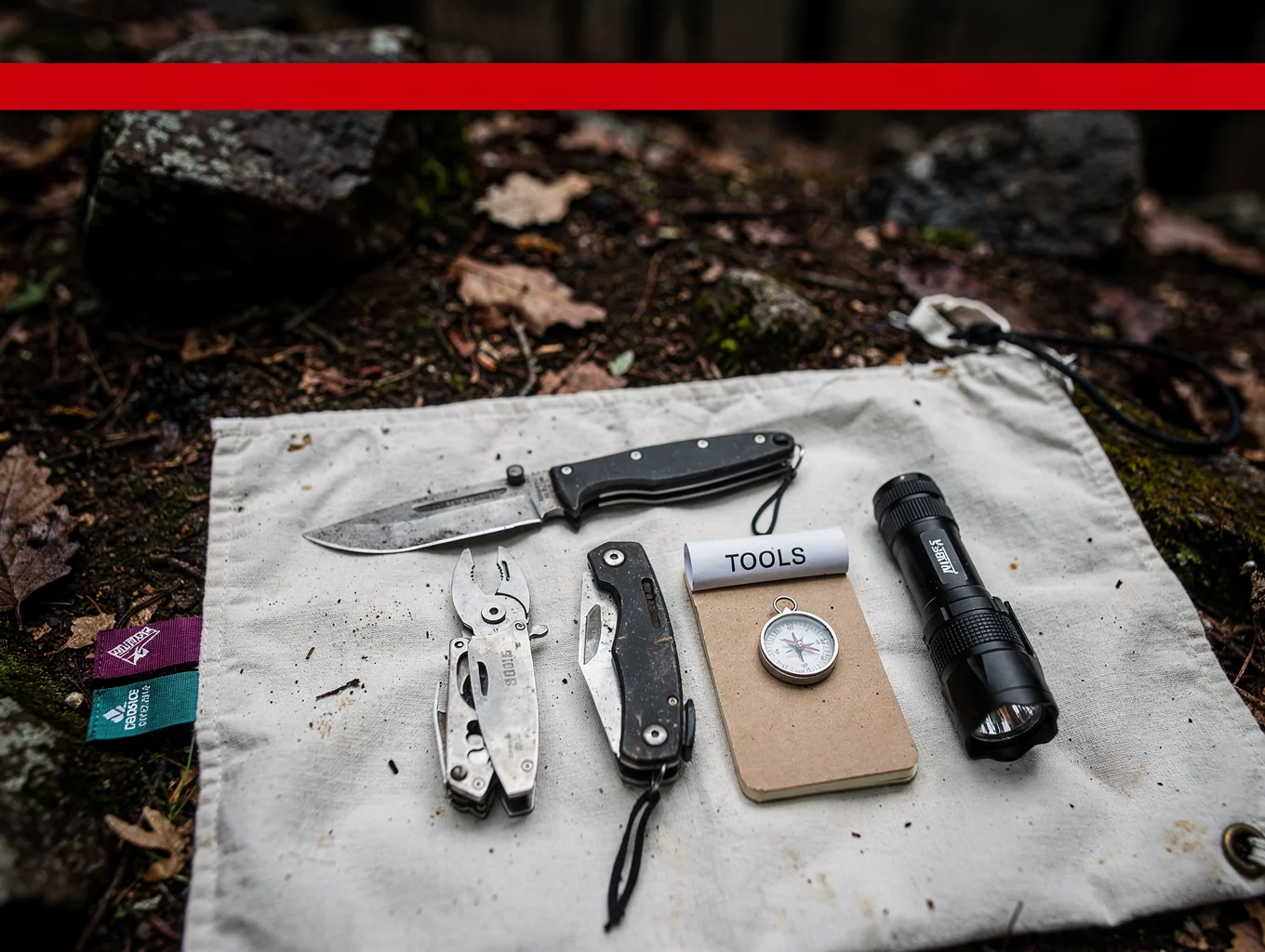
Critical Field Directives
- Prioritize understated, non-tactical designs that pass visual scrutiny in urban and suburban transit.
- Carry a compact multi-tool with full-size pliers and a locking blade as your core everyday mechanical base.
- Choose a dependable full-tang fixed blade or robust folding knife sized within jurisdictional blade-length limits.
- Rely on folding pull saws and lightweight entrenching tools over bulky axes for quiet, efficient fuel processing.
- Maintain a pocket-sized field maintenance kit with a diamond honing rod, lubricating oil, and spare fasteners.
Knives & Cutting Tools
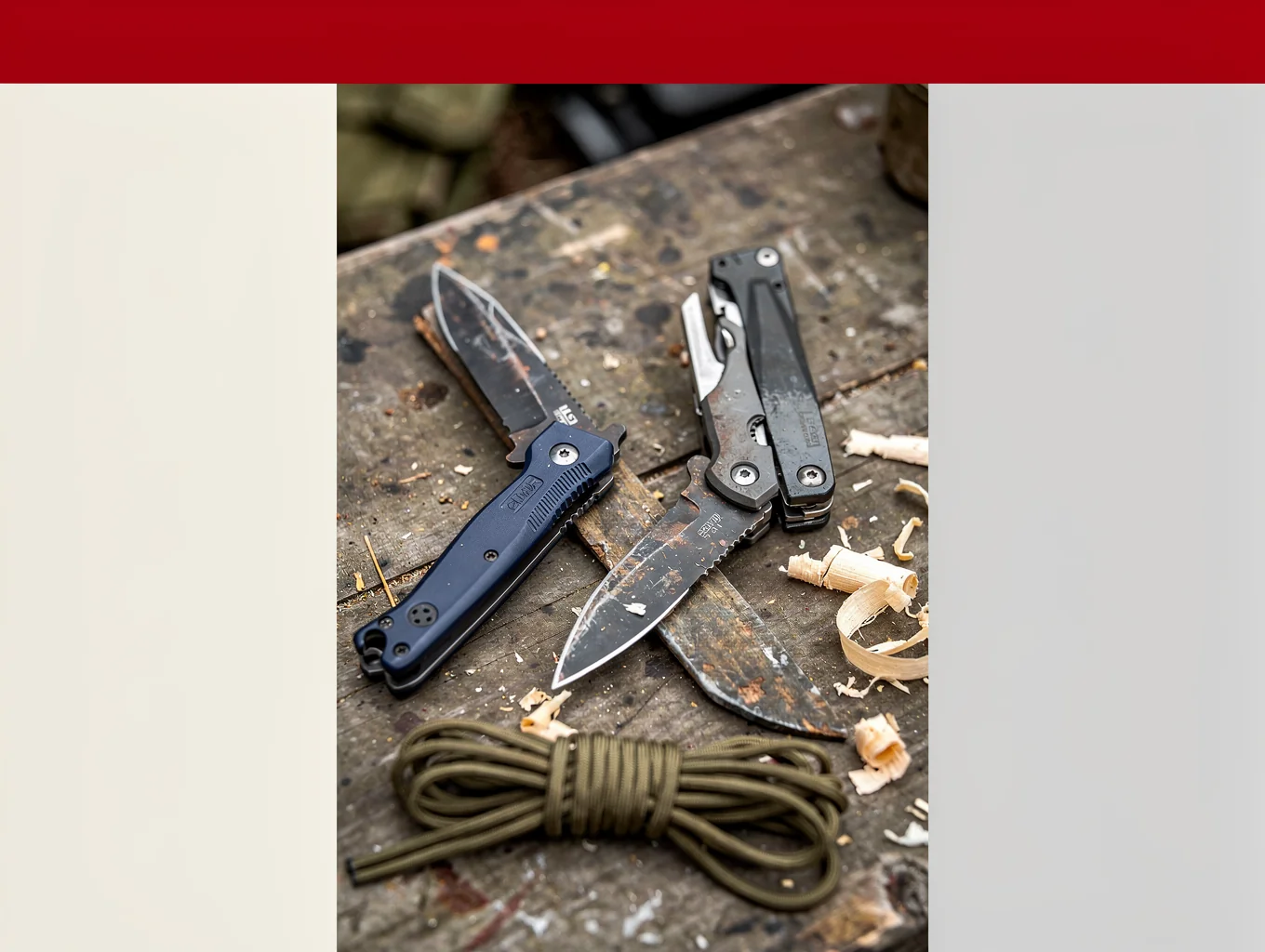
A sharp, dependable edge is the single most versatile implement in any survival loadout. For discreet field operations, prioritize clean, utilitarian lines over aggressive serrations, blacked-out coatings, or exaggerated combat guards that arouse suspicion. A plain-edge drop point or clip point design excels at clean wood carving, food prep, cordage slicing, and emergency medical improvisations.
A full-tang fixed blade between 3.5 and 4.5 inches provides the structural strength required for batoning dry kindling and light prying, while a quality folding knife with a reliable lock mechanism handles routine tasks on the move. Regular honing preserves steel longevity; never let an edge degrade to dullness, and always cut away from your torso and supporting limbs.
- 1Select a high-carbon or stainless blade steel with balanced toughness and field-sharpening ease.
- 2Confirm that your carry method and blade length strictly respect local municipal ordinances.
- 3Establish a routine maintenance habit: strop the micro-bevel daily after sustained cutting tasks.
- 4Enforce strict cutting discipline with two hands clear of the blade path and a dedicated safety circle.
Multi-Tools & Everyday Carry
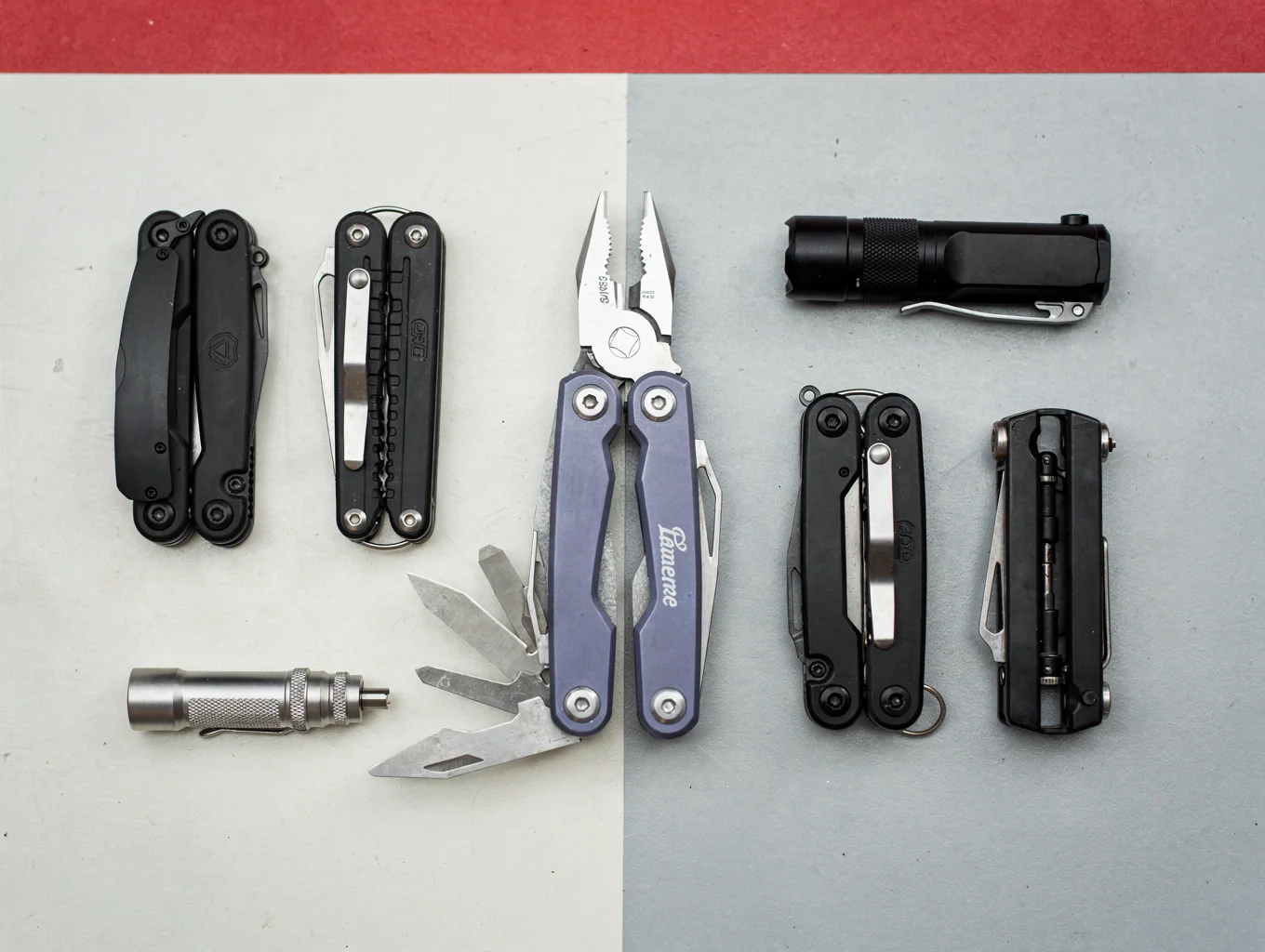
Everyday carry (EDC) tools must deliver broad utility while remaining completely unobtrusive under standard civilian attire. A full-sized folding multi-tool equipped with needle-nose pliers, wire cutters, screwdrivers, a can opener, and an awl can dismantle mechanical assemblies, pick up hot cookware, and repair disrupted perimeter gear.
Pair your multi-tool with a compact high-output LED flashlight capable of sub-lumen firefly mode to preserve night adaptation and avoid light discipline breaches. Carry these items inside deep pockets or subdued pouches rather than external tactical belt holsters to maintain an authentic civilian profile in public spaces.
- 1Carry a multi-tool featuring hardened wire cutters, durable pliers, and standard driver bits.
- 2Incorporate a single-cell pocket flashlight with dual low-output and momentary-high modes.
- 3Conceal pocket clips beneath untucked shirts or slide tools directly into internal organizer sleeves.
- 4Inspect all pivot hinges and locking bars weekly for lint accumulation, grit, and fastener tension.
Axes, Saws & Digging Tools
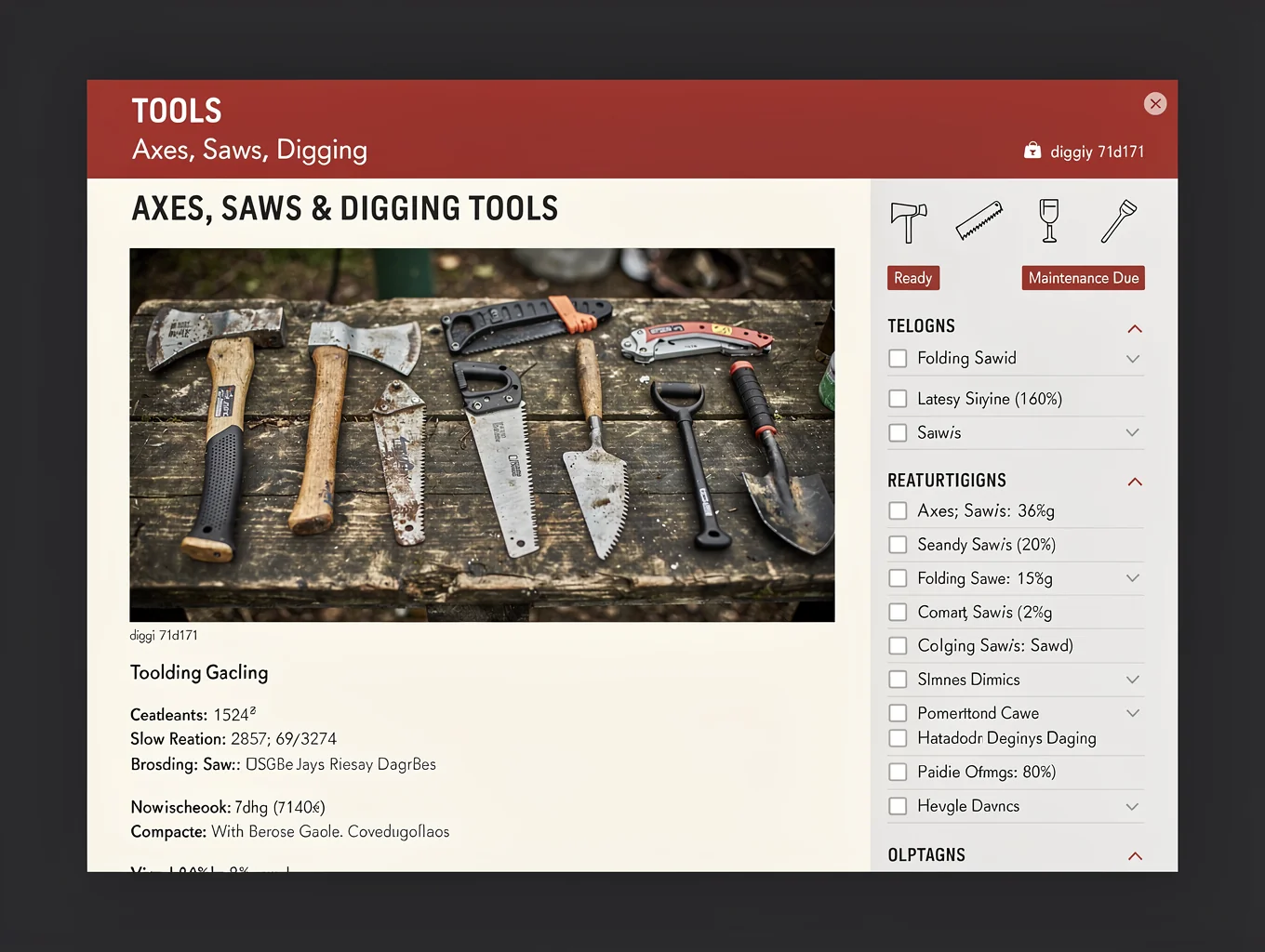
Processing deadfall and clearing ground for defensive shelter requires more leverage than a handheld knife can generate. While traditional forest axes deliver heavy impact power, they generate loud echoing strikes and add significant weight to mobile gear. A compact folding pull-stroke saw cuts timber faster, quieter, and with far less caloric expenditure.
For ground preparation, drainage trenches, and fire pit containment, a folding entrenching tool or lightweight trowel protects your blades from dulled edges and nicked spines. Choose tools with collapsible shafts and matte neutral finishes that stow flat against the interior backframe of an ordinary civilian pack.
- 1Pack a folding pruning or wood saw with Japanese-style pull-cut teeth for efficient, low-noise timber processing.
- 2Use a compact folding shovel or reinforced camp trowel to dig fire containment pits and latrine trenches.
- 3Avoid striking down standing dead trees when dry ground deadfall is immediately available for collection.
- 4Stow larger cutting implements securely inside your pack body rather than lashing them to the exterior.
Tool Care & Repair
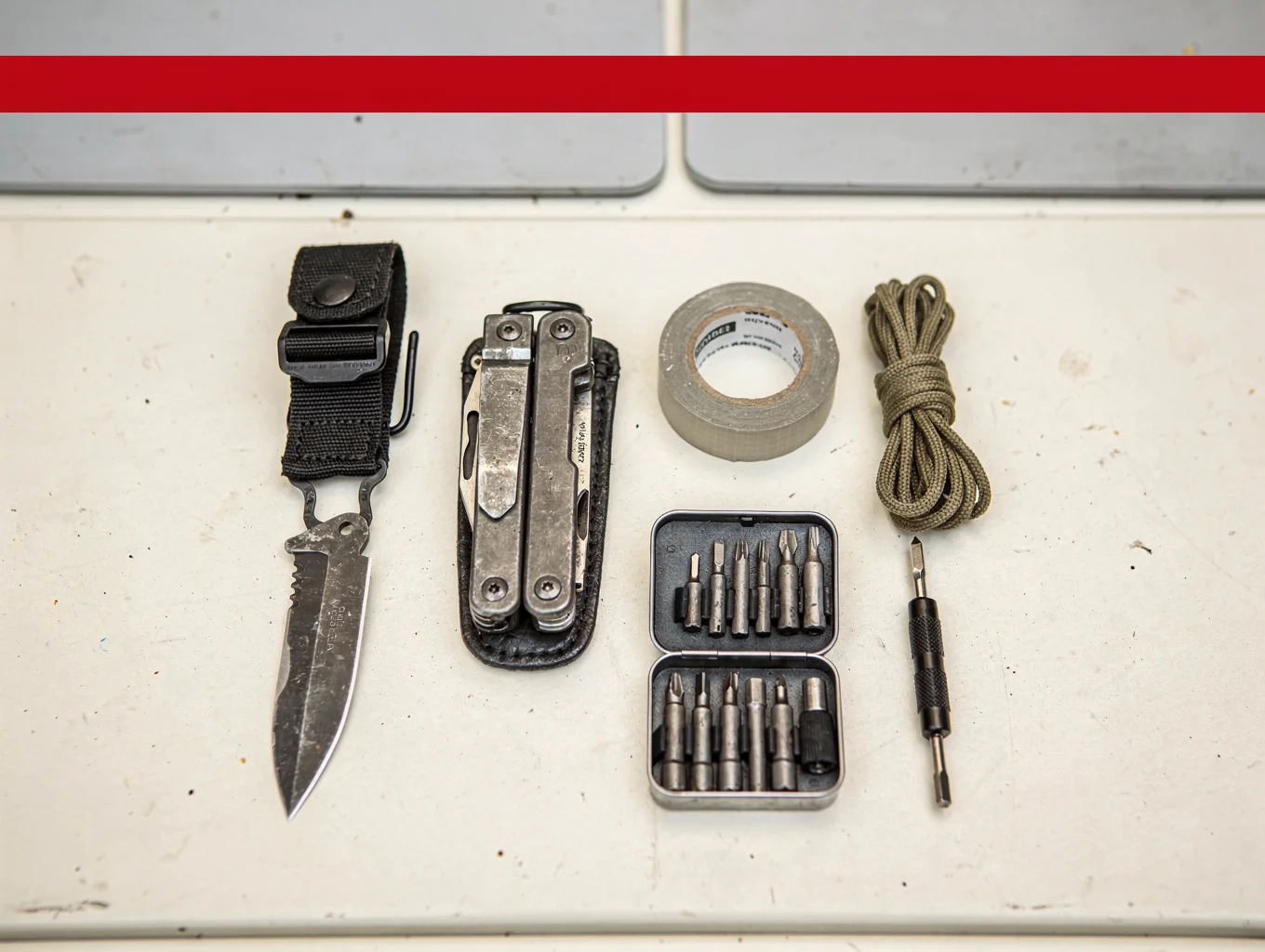
Tools exposed to humidity, acidic sap, and abrasive grit quickly succumb to corrosion and mechanical failure if neglected. A thin barrier film of mineral oil, camellia oil, or food-safe wax shields high-carbon steels against oxidation while remaining safe for impromptu game and ration prep.
Build a pocket-sized field maintenance tin containing a compact diamond sharpening rod, micro-driver bits, blue threadlocker, heavy-gauge wire, and high-tensile duct tape. This compact kit enables rapid handle repairs, tightened pivot screws, and restored edges without returning to a fixed workshop.
- 1Wipe blades dry and clear of organic residue immediately following field processing tasks.
- 2Apply a drop of food-safe protective oil to blade flats, pivots, and spring channels regularly.
- 3Store a dual-grit diamond hone or ceramic rod in your field kit to touch up working edges on site.
- 4Reinforce loose wooden or synthetic tool scales promptly using epoxy wrap or high-tensile cordage.
Essential Survival & Field Tool Inventory
- Full-tang drop-point fixed blade knife (3.5–4.5 in.) in neutral Kydex or leather sheath
- Heavy-duty folding multi-tool with needle-nose pliers and locking implement set
- Compact folding pull-cut pruning saw with replaceable high-carbon blade
- Ultra-compact dual-output flashlight with deep-pocket carry clip and red filter
- Collapsible steel entrenching tool or lightweight composite field trowel
- Double-sided diamond sharpening hone (coarse/fine) and leather stropping slip
- Field maintenance tin with mineral oil, threadlocker, spare fasteners, and repair wire
More Guides in this Series
Standard operational protocol & readiness briefing.
Standard operational protocol & readiness briefing.
Standard operational protocol & readiness briefing.
Standard operational protocol & readiness briefing.
Standard operational protocol & readiness briefing.
Standard operational protocol & readiness briefing.
Standard operational protocol & readiness briefing.
Standard operational protocol & readiness briefing.