
Food
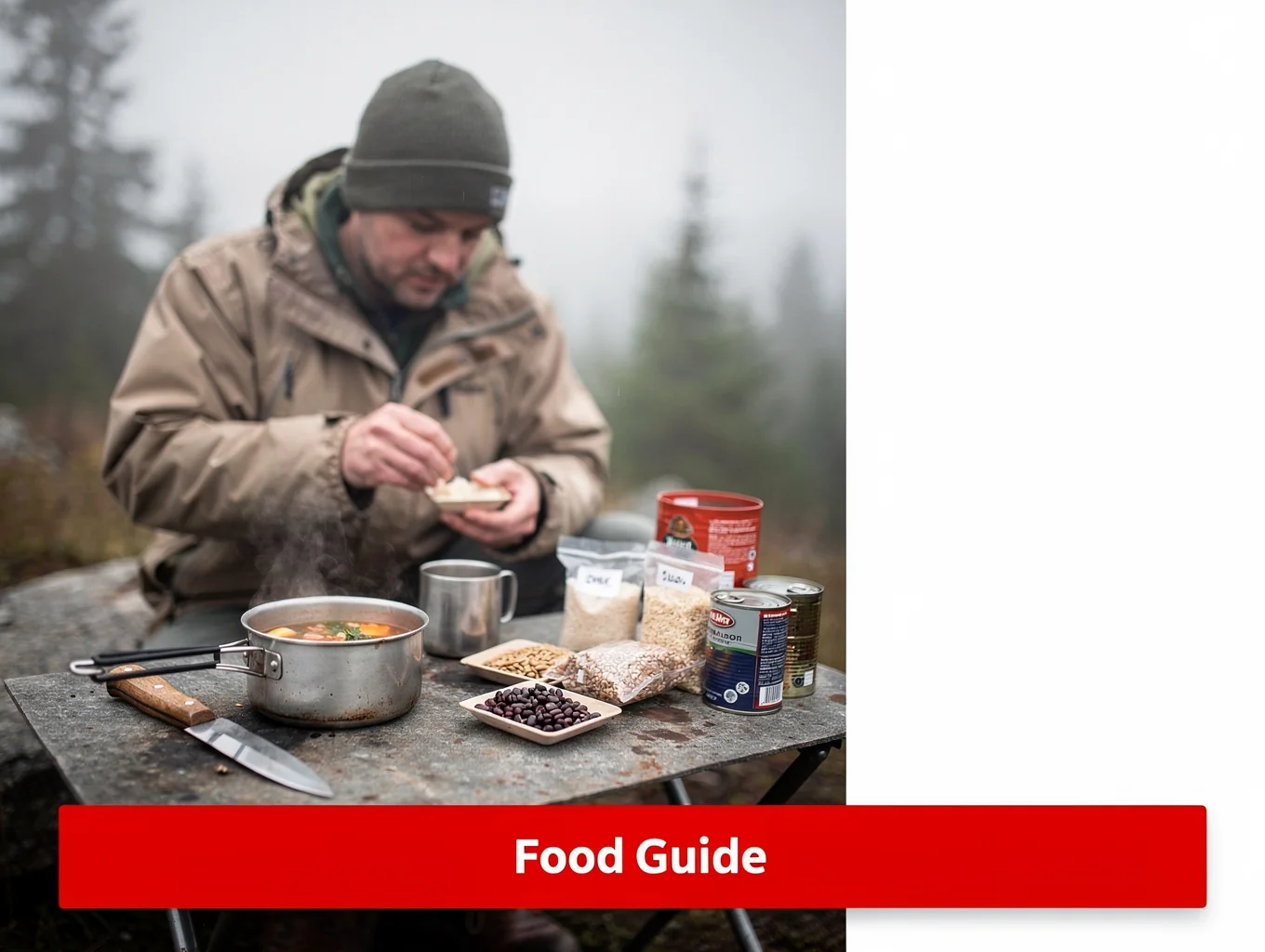
Securing reliable nutrition in austere or disruptive scenarios demands strict caloric discipline, risk-managed foraging, and reliable preservation. By combining passive procurement tactics with rigorous botanical verification and lawful, low-visibility food management, you maintain physical stamina without exposing your position or assets.
Critical Field Directives
- Verify every wild edible plant against verified botanical references; dangerous lookalikes can cause severe toxin ingestion.
- Calculate baseline daily caloric requirements against physical output before allocating or rationing rations.
- Prioritize passive procurement such as deadfalls, snares, and trotlines positioned along natural game funnels.
- Always check and comply with regional wildlife codes and local jurisdictional laws regarding trapping, fishing, and foraging.
- Cure, salt, or smoke harvested game immediately to eliminate residual moisture and stop bacterial spoilage.
Botanical Foraging & Edibility Verification
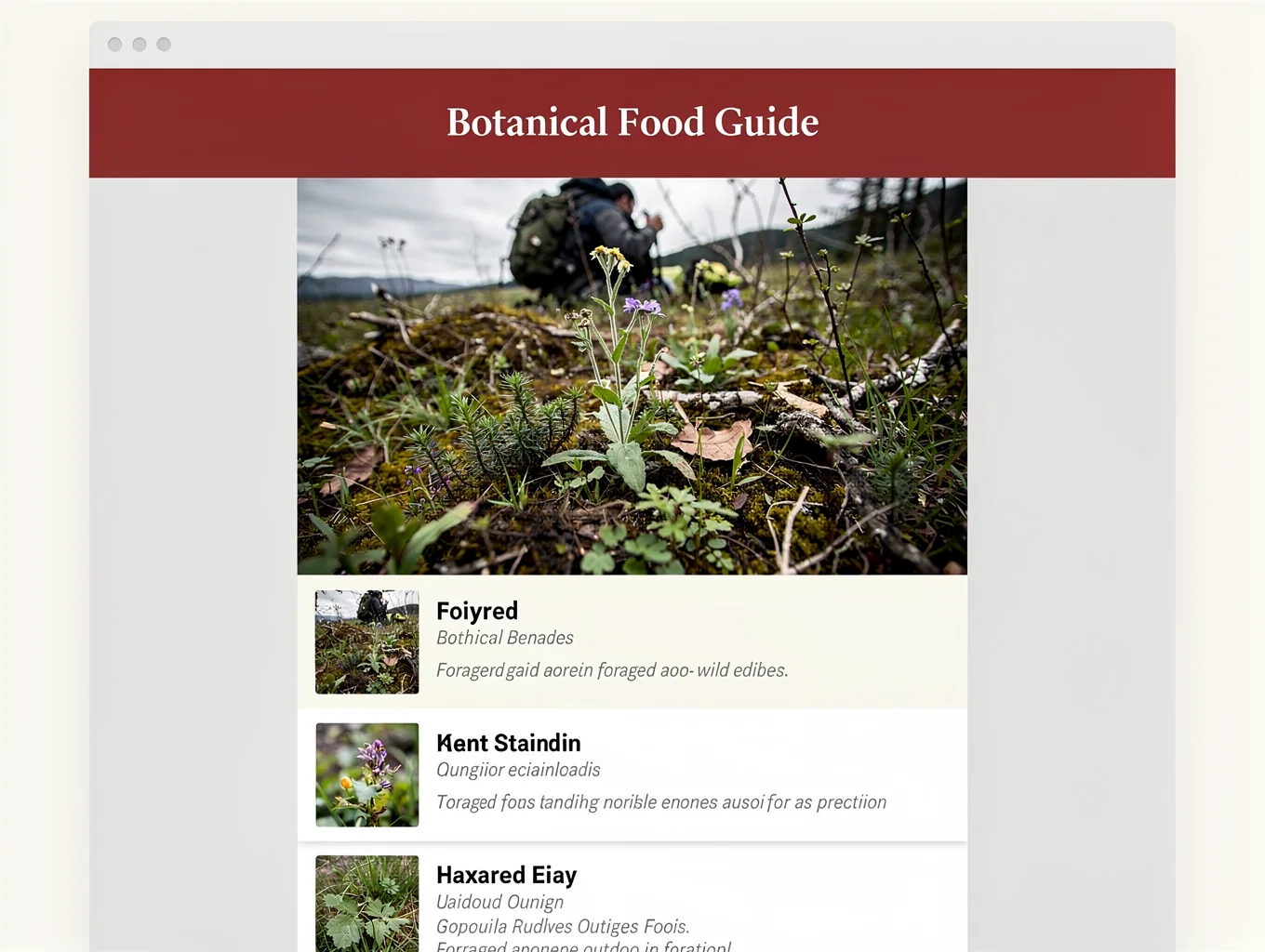
Wild plant foraging can deliver critical vitamins and trace minerals, but it carries extreme risk if performed without methodical identification. Rely strictly on positive plant identification using authoritative regional botanical manuals. Familiarize yourself with poisonous lookalikes such as poison hemlock versus wild carrot, or toxic nightshades mistaken for wild berries.
Always review local municipal and environmental conservation laws regarding plant harvesting, protected species, and public land restrictions. When encountering unverified flora in extreme survival conditions, execute a standardized edibility test with minimal skin contact before any ingestion, discarding any plant displaying milky sap, bitter almonds odor, or spine-laden foliage.
- 1Cross-reference plants against two independent regional field identification keys before harvesting.
- 2Inspect leaf patterns, stem structure, sap color, and root anatomy to rule out toxic family lookalikes.
- 3Check local wildlife conservation regulations to confirm permitted foraging zones and protected species.
- 4Perform a staged contact test on outer skin and lips only if facing verified extreme survival isolation.
Caloric Budgeting & Rations Management
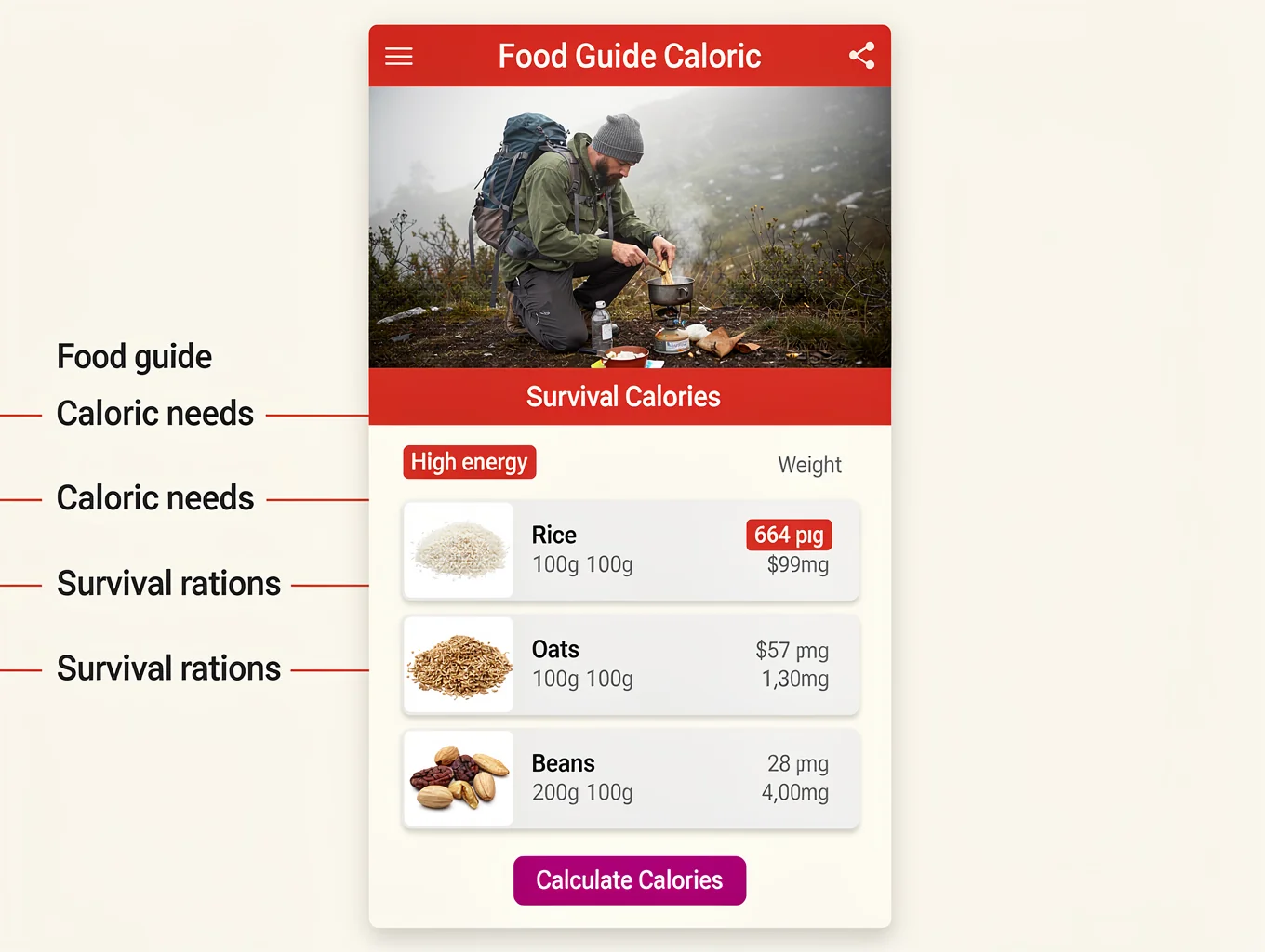
In a grid-down or displacement scenario, metabolic expenditure spikes due to physical labor, thermal regulation, and stress. Calculate your baseline basal metabolic rate and factor in an additional 800 to 1,500 calories per day for strenuous overland movement or cold exposure.
Manage stored pantry supplies and emergency rations through systematic rotation and discreet staging. Keep primary caloric stores—white rice, dried legumes, oats, and sealed cooking fats—stored in airtight, rodent-proof containers fitted with oxygen absorbers to prevent spoilage and mask food aromas.
- 1Calculate the daily caloric requirement for each team member based on ambient temperature and task load.
- 2Organize stored food supplies into sealed five-gallon food-grade buckets with 300cc oxygen absorbers.
- 3Inventory and rotate rations using a first-in, first-out sequence to ensure long-term nutritional viability.
- 4Prepare compact, shelf-stable pocket rations for immediate consumption during high-mobility movements.
Passive Game Procurement Tactics
Active hunting consumes excessive physical energy and generates noise, visible signatures, and ballistic risk that compromise gray-man discretion. Passive methods—including simple deadfalls, wire snares, and submerged trotlines—work continuously around the clock while you focus on security, water collection, and shelter maintenance.
Position passive sets along established natural funnels, pinch points, and animal runways leading toward water sources. Ensure your activities adhere strictly to local hunting and trapping statutes during standard readiness training; in non-emergency conditions, unauthorized trapping is unlawful and carries severe penalties.
- 1Scout natural game runs, tracks, rub marks, and watering paths to locate high-probability choke points.
- 2Verify local trapping and fishing legal statutes, seasons, and permitting guidelines prior to deployment.
- 3Set brass or stainless steel wire snares at head height for target small-game species along runway funnels.
- 4Deploy weighted trotlines or bank lines with natural bait in calm eddies, checking them at dawn and dusk.
Preservation, Curing & Spoilage Prevention
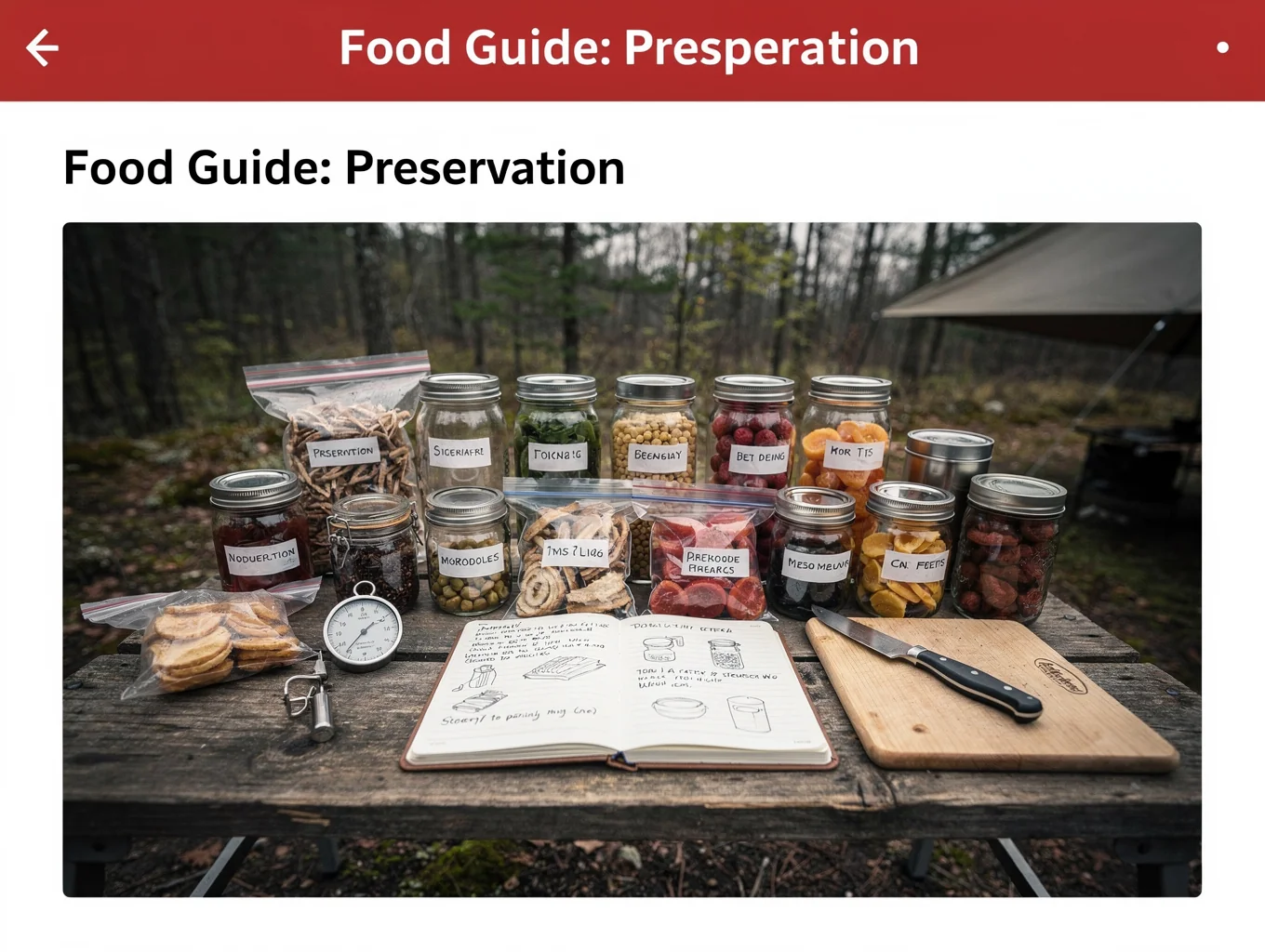
Securing wild game or opening bulk food reserves creates an immediate preservation challenge. High ambient moisture and warm temperatures accelerate bacterial reproduction and insect infestation within hours. Excess meat must be processed immediately using drying, salting, or smoking techniques to purge moisture content.
Slice fresh meats thinly along the grain to optimize surface area exposure. Cold smoke or air-dry strips over a low-profile, clean-burning hardwood fire with minimal visible smoke emissions. For longer preservation, pack trimmed cuts in coarse non-iodized salt or hang them under insect-proof netting in well-ventilated shade.
- 1Field dress and skin harvested game immediately away from your primary camp perimeter to minimize predator interest.
- 2Trim away all excess external fat and slice lean muscle into uniform quarter-inch strips.
- 3Apply coarse curing salt generously or immerse strips in a heavy brine solution to inhibit microbial growth.
- 4Hang salted strips inside fine mosquito netting over low, indirect hardwood smoke until completely brittle.
Essential Food Procurement & Preservation Gear
- 22-gauge brass and stainless steel snare wire spools
- Comprehensive regional wild edible and toxic plant field guide
- Heavy-duty monofilament trotline cord with assorted circle hooks and sinkers
- 5-lb container of coarse food-grade non-iodized curing salt
- Fine mesh game hanging bags and insect-proof drying netting
- Pocket multi-tool with dedicated fish scaler, gut hook, and bone saw
- Mylar barrier bags and 300cc oxygen absorbers for dry goods
More Guides in this Series
Standard operational protocol & readiness briefing.
Standard operational protocol & readiness briefing.
Standard operational protocol & readiness briefing.
Standard operational protocol & readiness briefing.
Standard operational protocol & readiness briefing.
Standard operational protocol & readiness briefing.
Standard operational protocol & readiness briefing.
Standard operational protocol & readiness briefing.