
Water
Hydration security underpins all field survivability. By reading topography, identifying indicator vegetation, executing staged sediment pre-filtration, and applying disciplined thermal and chemical purification methods, you secure reliable potable water while keeping a discreet, low-profile footprint.
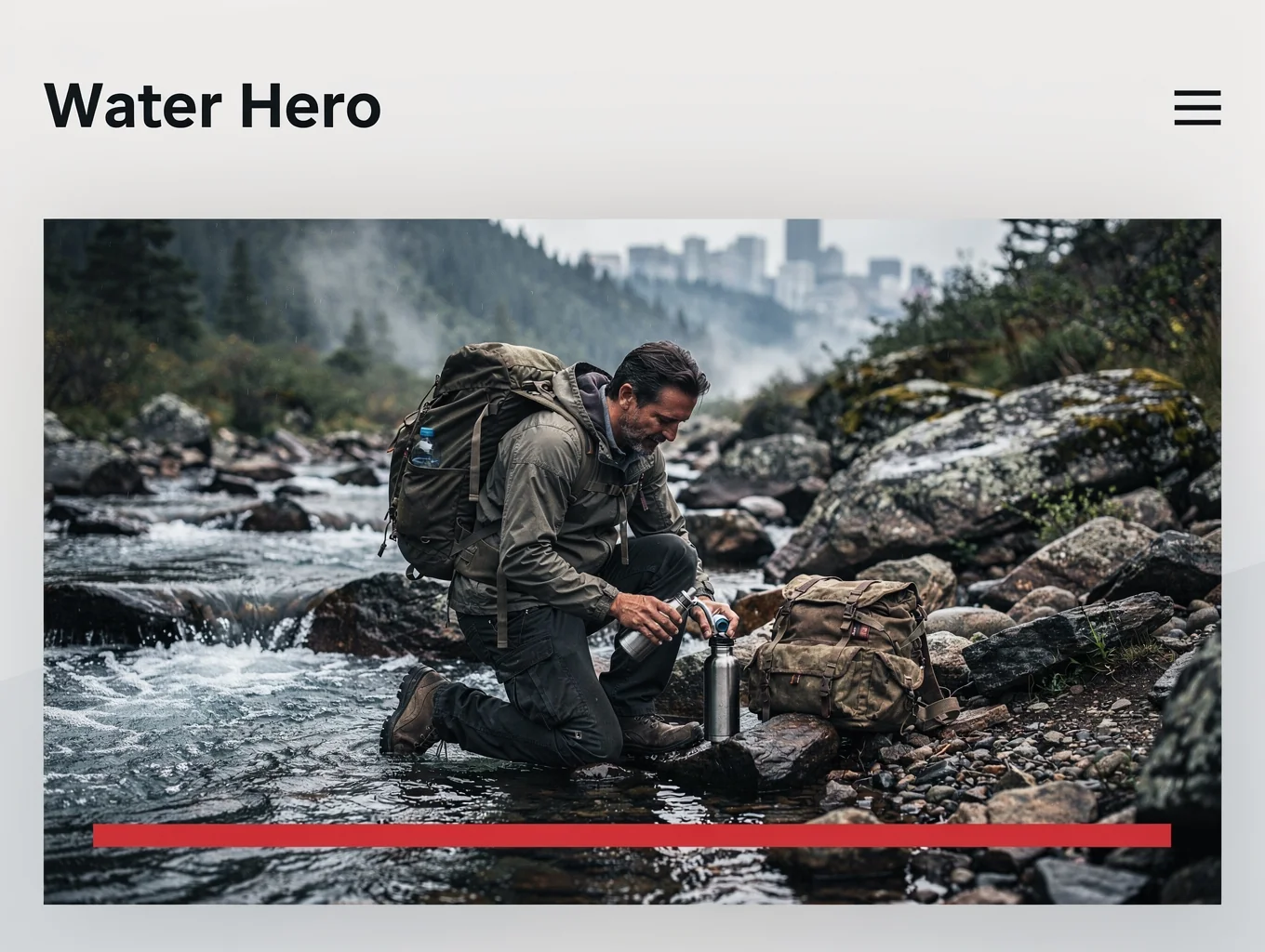
Critical Field Directives
- Prioritize flowing surface water over stagnant pools, tracking drainage contours and indicator flora like willows and cattails.
- Always separate raw catchment vessels from purified containers to eliminate cross-contamination.
- Pre-filter turbid water through dense cloth or sand-and-gravel beds to preserve microfilter membranes and boost boiling efficacy.
- Sustain a vigorous rolling boil for at least one full minute to neutralize biological pathogens and waterborne parasites.
- Store treated water in sealed, opaque vessels positioned away from direct sunlight and ambient ground heat.
Terrain Sourcing & Natural Indicators
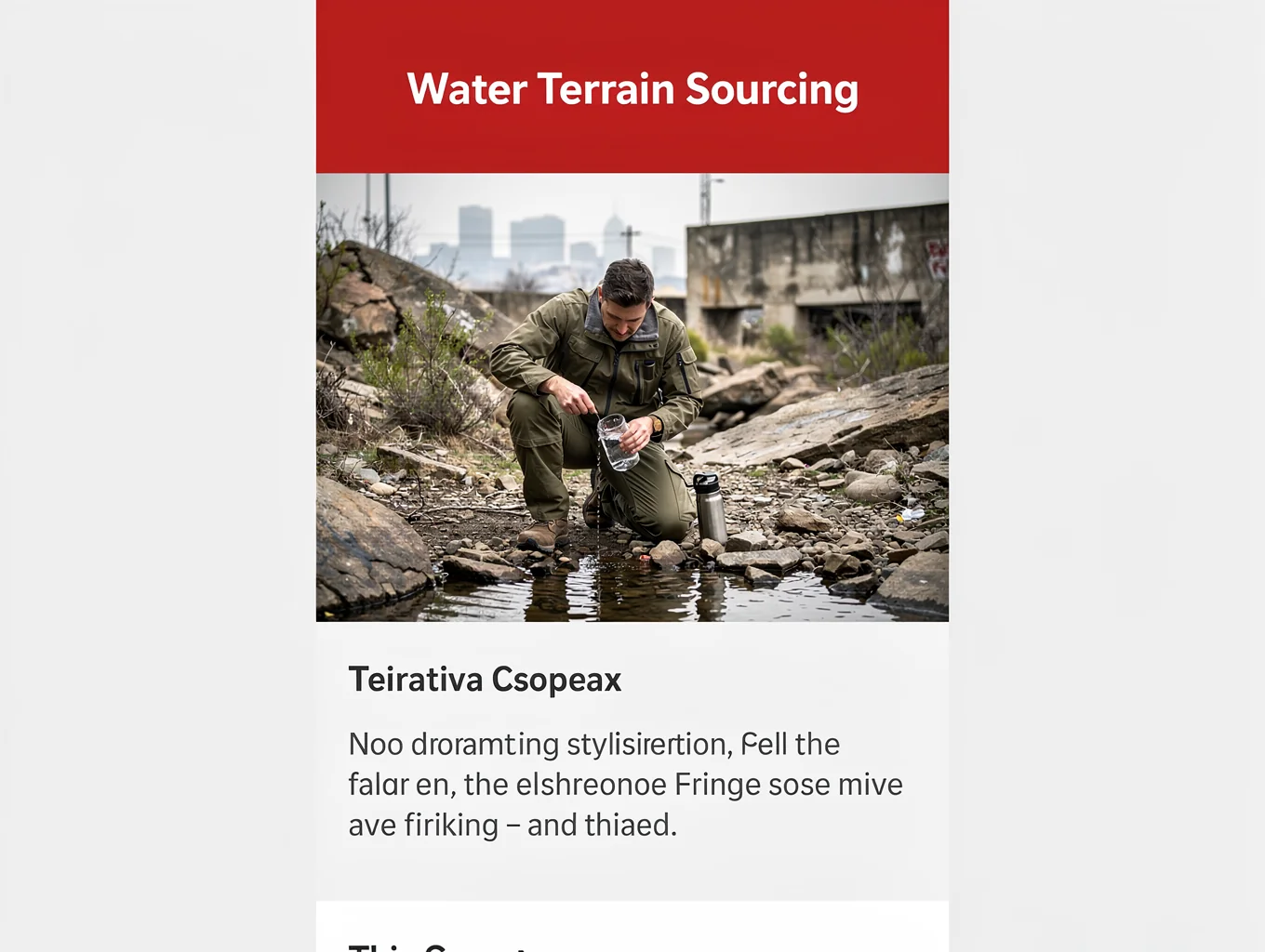
In austere environments, locating dependable moisture requires understanding how hydrology shapes the landscape. Water consistently follows gravity into ravines, dry washes, valley seams, and rock clefts. Early morning wildlife movements, converging insect swarms, and dense stands of hydrophilic vegetation like cottonwoods, willows, and reeds indicate shallow subsurface tables even in arid terrain.
When surface water is absent, search along the outer bends of dry riverbeds where moisture frequently collects beneath fine gravel. Digging a test seep well into shaded damp sand allows clear subsurface water to percolate into the depression, providing a discreet source that avoids exposed shoreline activity.
- 1Follow topographical depressions, valley draws, and base contours toward natural collection points.
- 2Scan for hydrophilic indicator flora such as cattails, reeds, willows, and dense patch moss.
- 3Observe morning game trails and bird flight patterns converging toward low-lying drainage zones.
- 4Excavate a shallow seep well in shaded alluvial sand along dry river bends and allow sediment to settle.
Sediment Separation & Staged Pre-Filtration
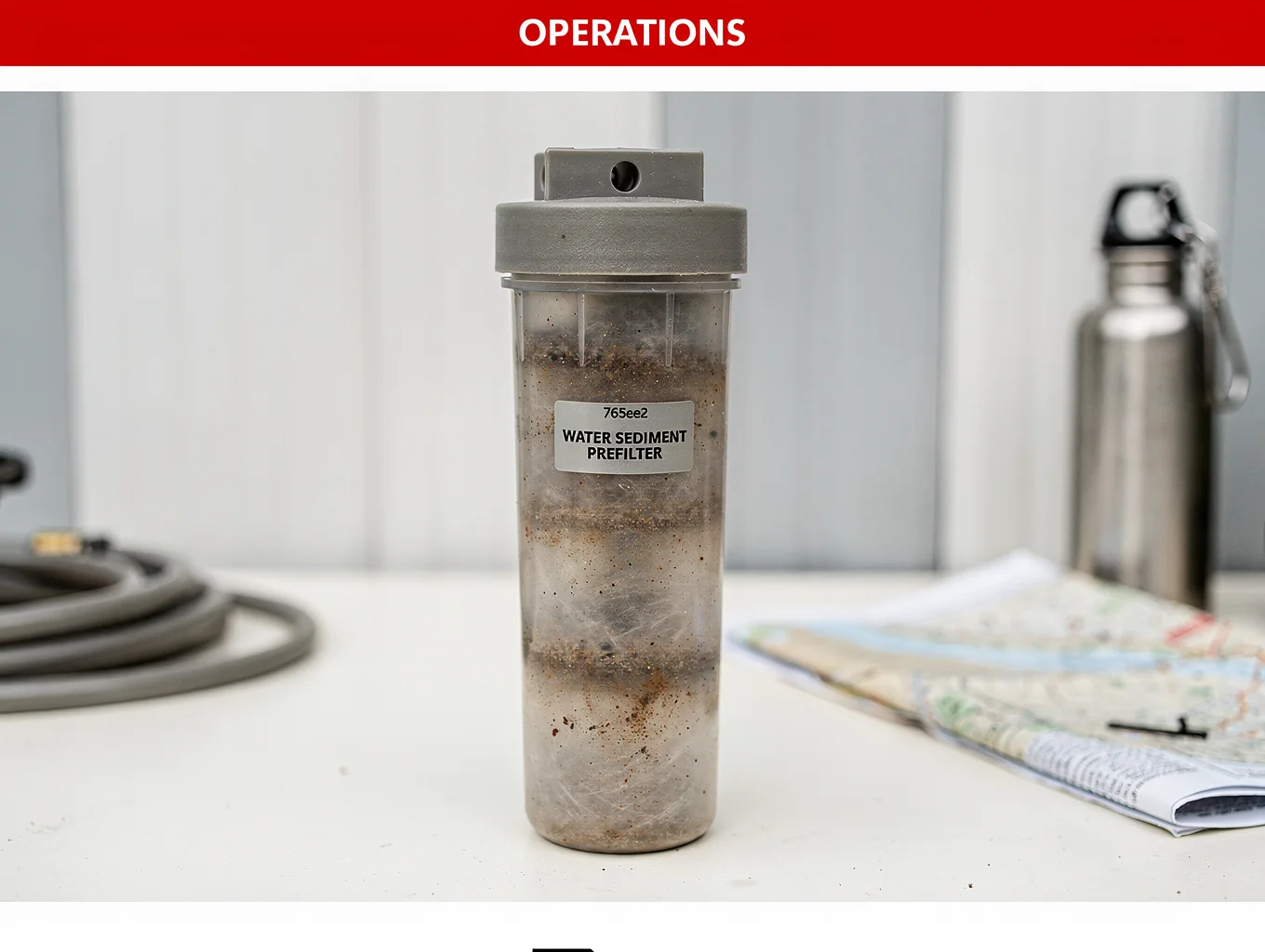
Raw water harvested from natural sources carries suspended silt, organic debris, and heavy particulate matter that rapidly clogs hollow-fiber filters and reduces thermal disinfection efficiency. Staged pre-filtration removes bulk particulate before any microbiological treatment begins.
Construct an improvised gravity separator using clean cotton bandanas, canvas, or a layered bottle filter filled with crushed charcoal, coarse sand, and fine gravel. Allowing harvested water to stand in a dedicated catchment bucket for an hour lets heavy suspended solids settle out naturally as sediment before decanting.
- 1Collect turbid surface water into an isolated dirty catchment vessel and let sediment settle for 30–60 minutes.
- 2Decant the clarified upper layer through tightly woven cotton cloth, a shemagh, or a paper filter cone.
- 3Build a gravity column using graduated layers of gravel, sand, and crushed wood charcoal to trap finer matter.
- 4Inspect the pre-filtered yield for clarity before passing it to thermal or microfiltration stages.
Disinfection, Boiling & Pathogen Inactivation
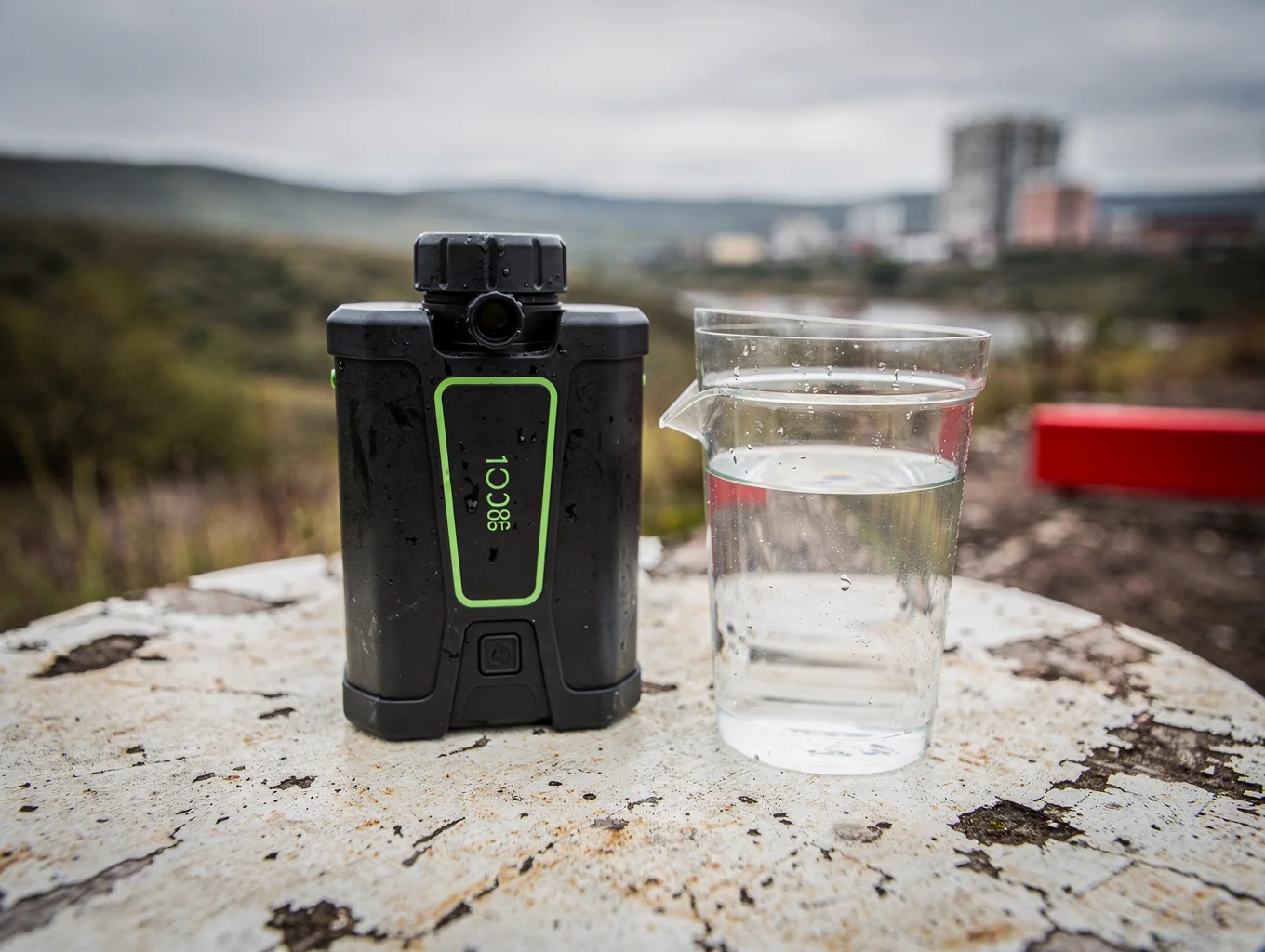
Pre-filtration only addresses clarity—biological pathogens like Giardia, Cryptosporidium, and bacterial contaminants remain viable until neutralized. Thermal sterilization remains the most foolproof field protocol, requiring no specialized chemicals or proprietary replacement parts.
Bring the decanted water to a vigorous, continuous rolling boil for a minimum of one full minute, extending to three minutes when operating at high altitudes above 2,000 meters. For tactical situations where fire signature or smoke must be avoided, deploy 0.1-micron hollow-fiber membranes or chlorine dioxide tablets in dark containers.
- 1Transfer pre-filtered water into a clean, fire-safe stainless steel or titanium vessel.
- 2Apply heat until a vigorous rolling boil is achieved across the entire water surface.
- 3Maintain the rolling boil for one continuous minute (three minutes above 2,000 meters altitude).
- 4Allow water to cool naturally while covered to prevent airborne dust contamination.
Sanitary Storage & Cross-Contamination Discipline
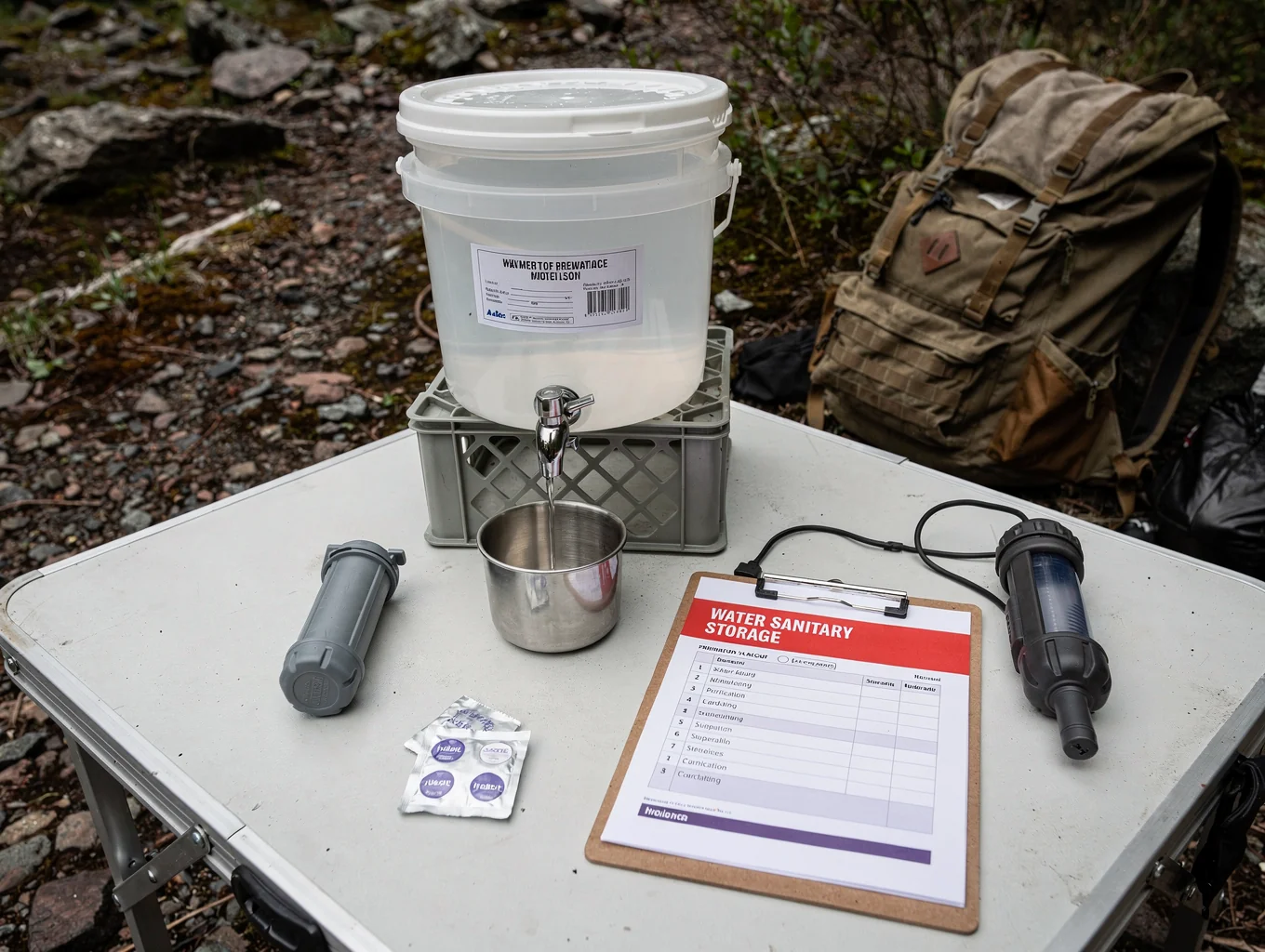
Securing pure water is pointless if storage containers or decanting practices reintroduce pathogens. Strict gear segregation between dirty collection bladders and clean drinking bottles is a fundamental operational discipline.
Keep finished potable reserves in food-grade, opaque water bladders or heavy-walled bottles fitted with secure caps. Store reserves in cool, shaded spaces to inhibit bacterial bloom, and periodically sanitize storage rims and threads with mild hypochlorite solution or boiling water rinses.
- 1Color-code or label all collection bladders, hoses, and caps as strictly raw or clean.
- 2Sterilize storage canteens and bottle threads prior to transferring fresh potable yields.
- 3Seal filled containers tightly and store in shaded pack compartments away from direct sunlight.
- 4Inspect stored water supplies daily for taste, clarity, and seal integrity during prolonged operations.
Essential Water Procurement & Treatment Gear
- 0.1-micron hollow-fiber microfilter with backflushing syringe
- Single-walled stainless steel or titanium bushcraft bottle for direct boiling
- Food-grade collapsible dirty water collection bladders (2–4 liter capacity)
- Chlorine dioxide water purification tablets or liquid treatment kit
- High-density cotton filtration bandanas or micro-mesh pre-filter bags
- Silcock key and universal water faucet adapter for urban sourcing
- Food-grade tubing and compact gravity-feed suspension hardware
More Guides in this Series
Standard operational protocol & readiness briefing.
Standard operational protocol & readiness briefing.
Standard operational protocol & readiness briefing.
Standard operational protocol & readiness briefing.
Standard operational protocol & readiness briefing.
Standard operational protocol & readiness briefing.
Standard operational protocol & readiness briefing.
Standard operational protocol & readiness briefing.