
Off-Grid Living
Sustained off-grid survival requires complete decoupling from municipal infrastructure while maintaining an indistinguishable, low-visibility presence. By integrating discreet photovoltaic systems, closed-loop water and sanitation cycles, passive subterranean food preservation, and disciplined perimeter concealment, you establish long-term independence without drawing unwanted attention.
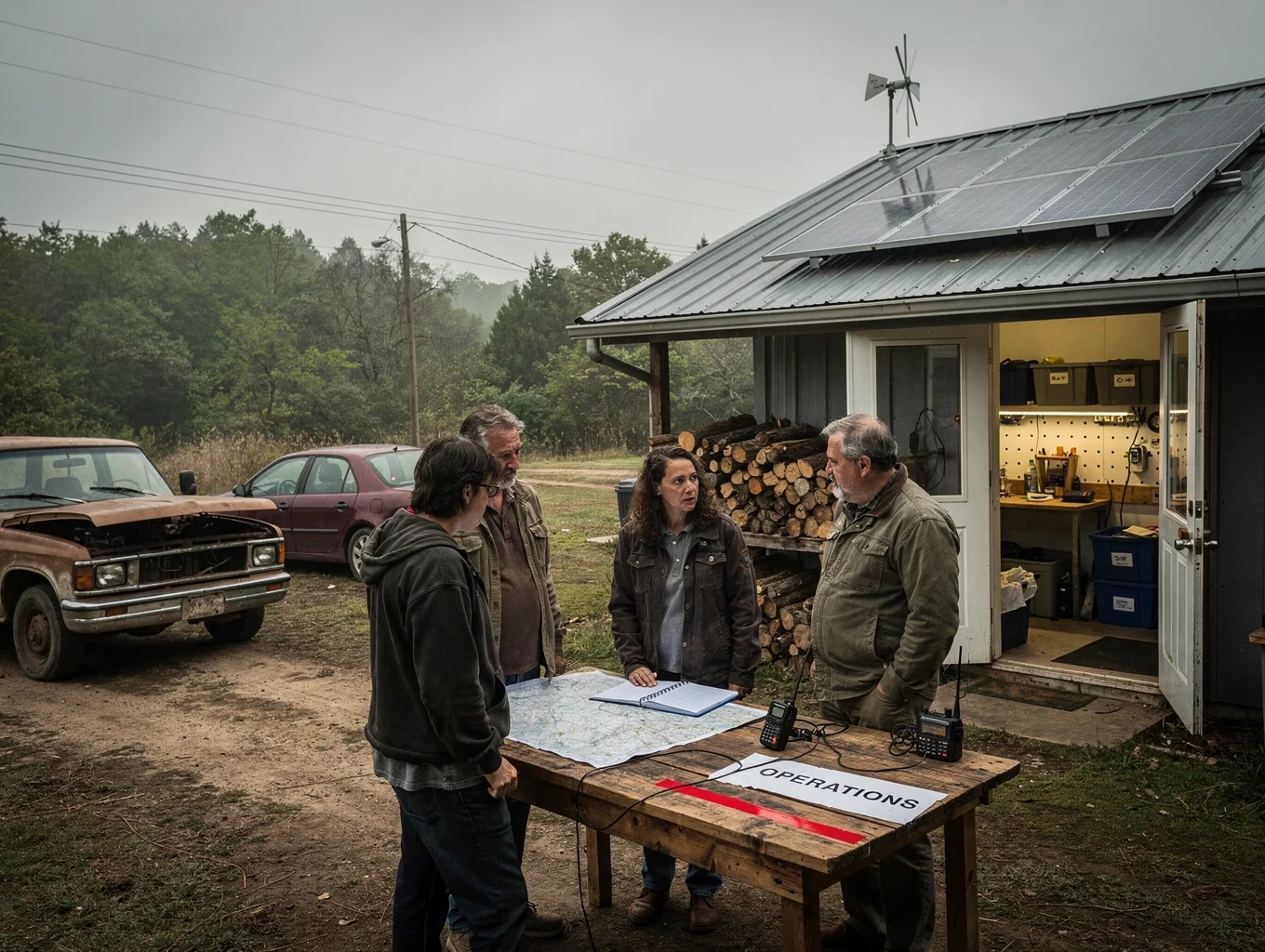
Critical Field Directives
- Design silent, non-reflective power arrays that avoid glare signatures and eliminate audible generator signatures.
- Decouple all critical utilities into redundant, passive fallback subsystems that require zero municipal replenishment.
- Blend infrastructure into existing terrain contours, natural treelines, and utilitarian vernacular architecture.
- Secure closed-loop waste and greywater dispersal to prevent surface ponding, foul odors, and visible biological traces.
- Prioritize manual and non-electric processing tools alongside primary systems to ensure operational longevity during component failure.
Low-Signature Power & Resilient Energy
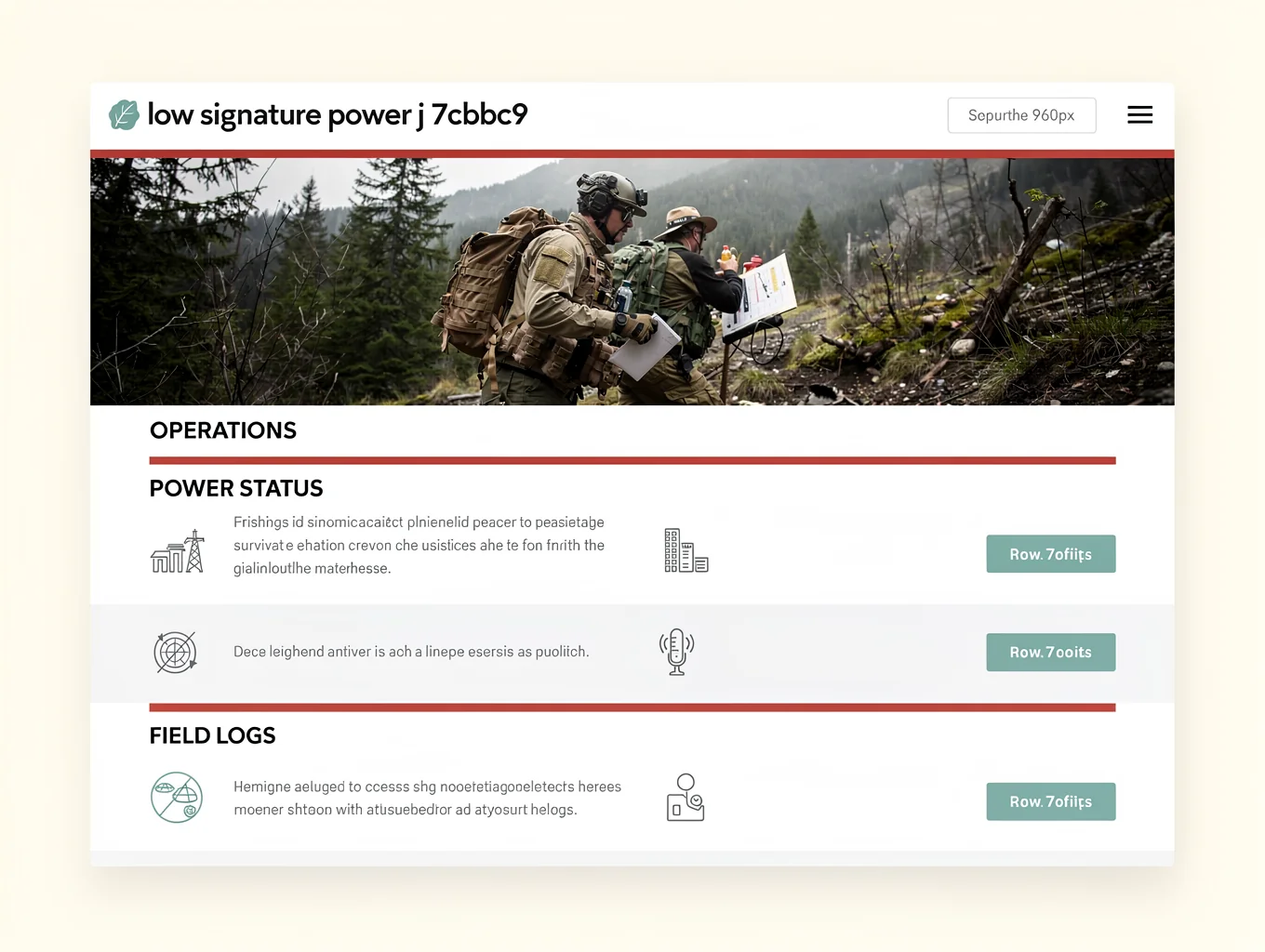
Modern off-grid electrical independence relies on minimizing base loads and eliminating thermal and acoustic signals. High-capacity lithium iron phosphate (LiFePO4) storage banks combined with high-efficiency hybrid inverters provide steady power without the telltale rumble, exhaust plume, or fuel supply vulnerability of conventional combustion generators.
Ground-mounted photovoltaic panels positioned behind natural brush berms or roof arrays set with matte, anti-reflective coatings prevent bright sun-glint across valley approaches. Critical circuitry should incorporate localized surge protection, manual disconnects, and hardened Faraday containment for spare inverters and charge controllers.
- 1Audit essential daily watt-hour demands and downscale continuous refrigeration and lighting consumption.
- 2Position photovoltaic arrays below prominent ridgelines using anti-glare framing and terrain masking.
- 3House LiFePO4 battery banks within insulated, temperature-regulated enclosures fitted with passive venting.
- 4Stash redundant charge controllers, cables, and vital electronics in sealed EMP-resistant dry storage cans.
Water Independence & Closed-Loop Waste
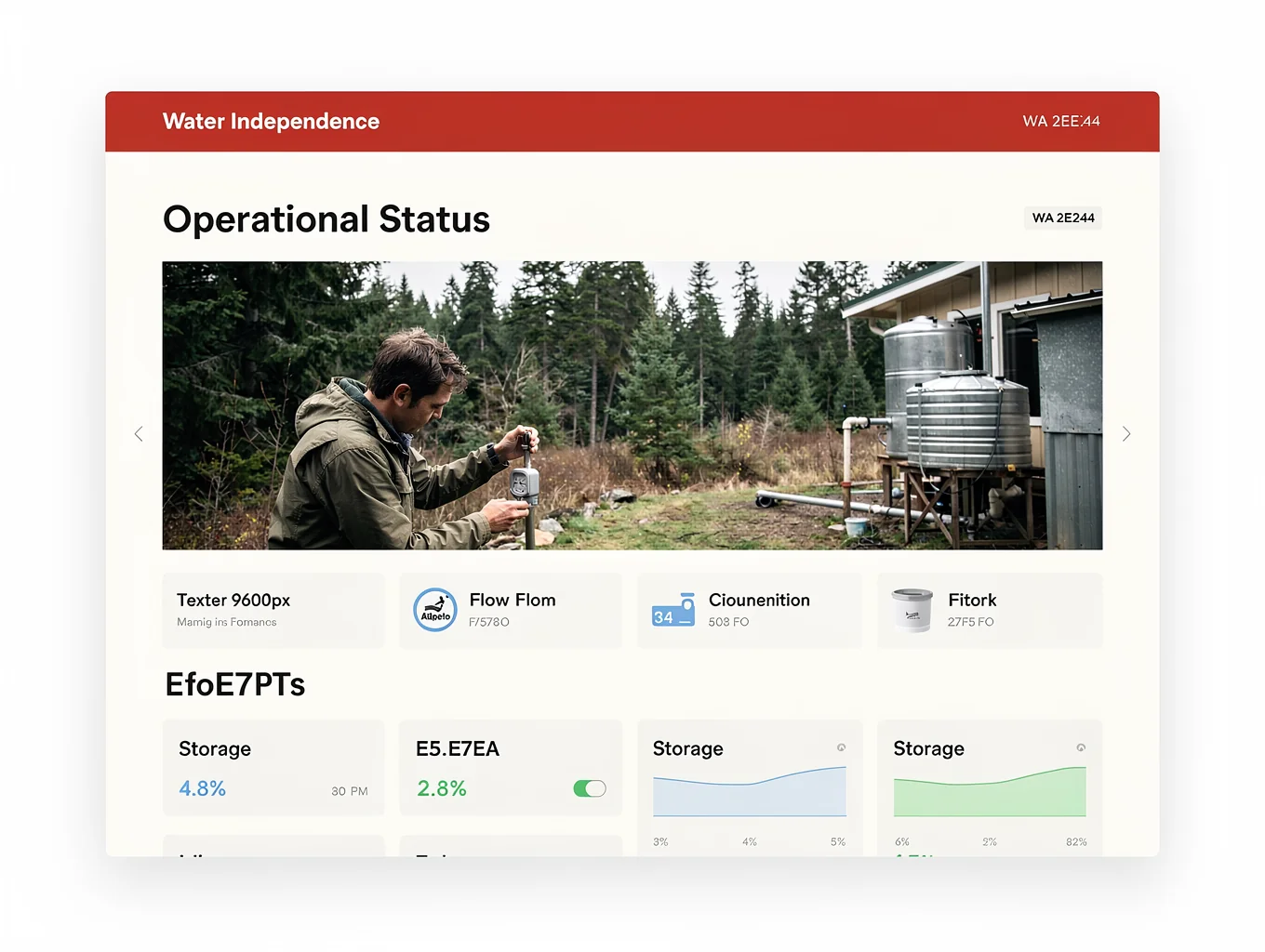
Water resilience demands multi-stage harvesting coupled with sanitary, odor-free waste treatment that leaves no environmental footprint. A balanced installation pairs concealed roof rainwater collection and food-grade cisterns with an insulated manual-draw well pump positioned for discreet servicing.
Wastewater must be managed without creating wet zones or vegetation blooms that contrast against surrounding vegetation. Diverting laundry and wash greywater into subsurface gravel filtration beds and deploying well-vented dry composting toilets eliminates open sewage lines and preserves clean groundwater.
- 1Install dark-pigmented rain catchment barrels with fine sediment traps and opaque light-blocking covers.
- 2Fit deep-well setups with hand-operated mechanical backup pumps capable of running without electrical grid input.
- 3Direct kitchen and wash greywater through subterranean reed and gravel leach beds beneath natural soil cover.
- 4Operate biological composting toilets with active carbon filtration and desiccating organic cover material.
Subsurface Food Security & Preservation
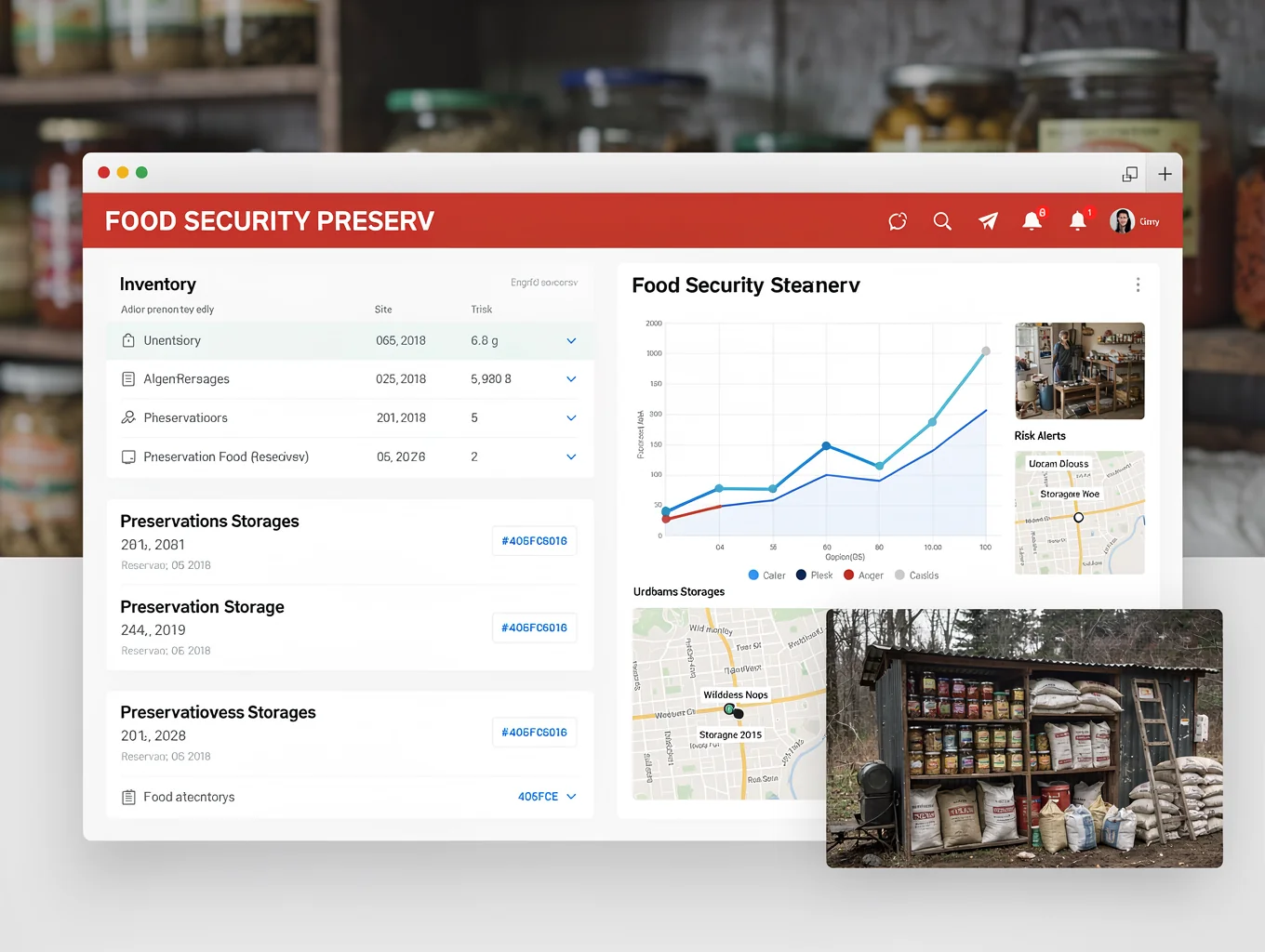
Long-term sustenance hinges on production and preservation methods that do not rely on constant active refrigeration. Integrating polyculture kitchen gardens, perennial edible bushes, and small-footprint greenhouse cold frames allows food production to mimic wild flora rather than patterned commercial farming.
Subterranean root cellars leverage natural earth thermoregulation to maintain stable humidity and cool temperatures year-round. Combining root cellaring with dry salting, lacto-fermentation, solar dehydration, and pressure canning builds a multi-year shelf-stable food reserve impervious to power interruptions.
- 1Excavate a shaded, well-drained root cellar maintaining steady 32°F–40°F temperatures with gravel floor humidity.
- 2Interplant hardy root staples, greens, and squash amidst natural brush to mask agricultural layout lines.
- 3Establish bulk storage rotations using airtight food-grade mylar bags, oxygen absorbers, and sealed steel drums.
- 4Execute seasonal batches of pressure canning, brining, and solar dehydration to preserve surplus harvest yields.
Site Selection, Concealment & Perimeter Security
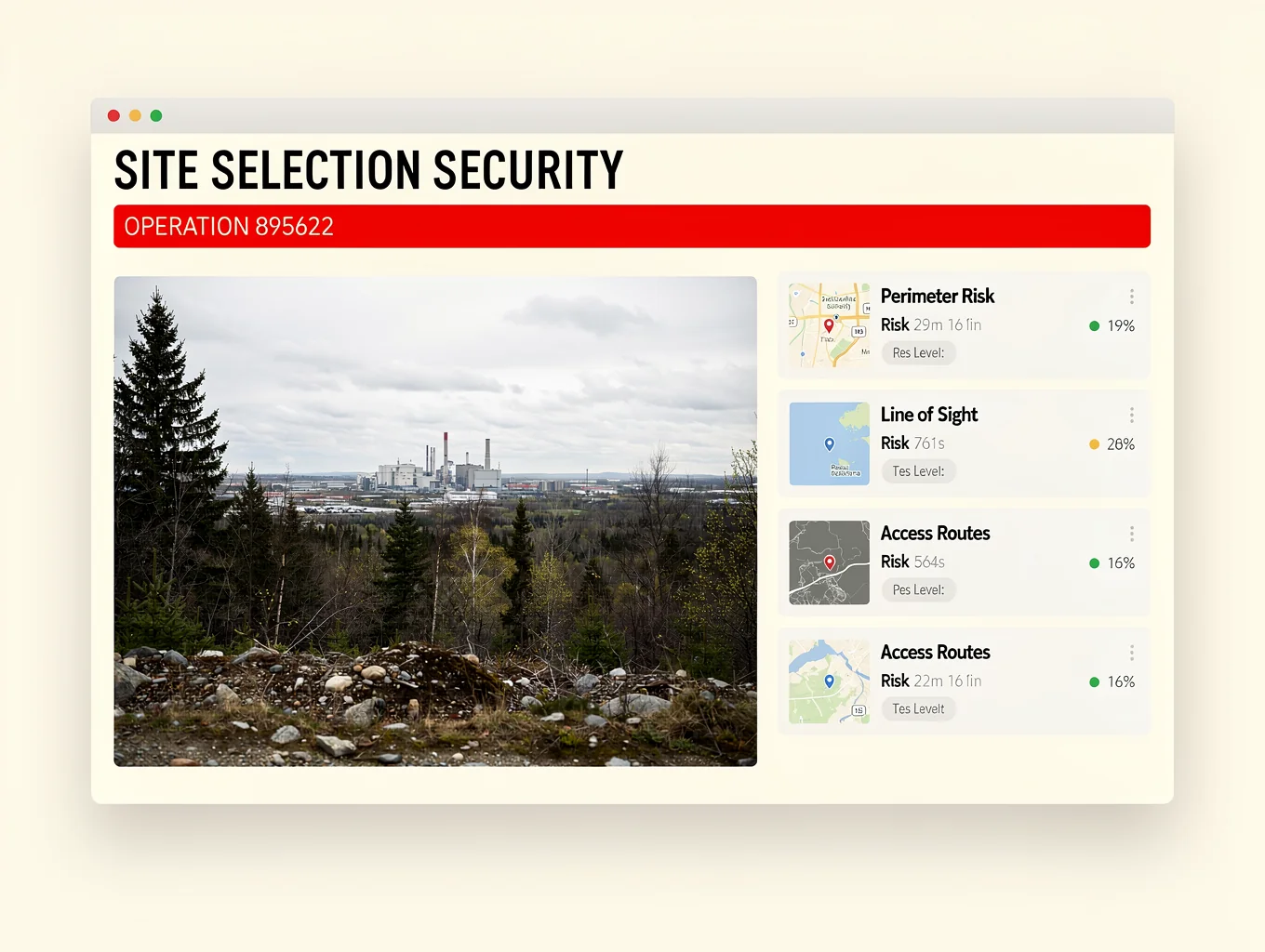
The ideal off-grid redoubt maintains legal deed access while remaining hidden from arterial transportation corridors and public observation points. Selecting ground with secondary egress routes, natural topography deflection, and abundant dead-space tree cover prevents direct line-of-sight reconnaissance from nearby vantage areas.
Passive perimeter defense supersedes aggressive overt barriers. Concealed trip-line chimes, passive infrared path alerts, radio monitoring stations, and strict night-time light-discipline protocols maintain early situational awareness without signaling defensive preparedness to transient observers.
- 1Map property access corridors and confirm multiple discreet unpaved ingress and egress trail routes.
- 2Enforce strict blackout curtains, recessed lighting, and shielded downward exterior fixtures at night.
- 3Deploy covert perimeter sensors and mechanical trip annunciators along natural choke points and dead angles.
- 4Maintain battery-powered SDR scanners and multi-band radio receivers to monitor regional communications silently.
Essential Off-Grid Homestead & Resilience Gear
- Lithium iron phosphate (LiFePO4) 48V battery bank with programmable MPPT solar charge controller
- Manual deep-well hand pump mechanism with frost-proof casing and replacement leather seals
- Food-grade subterranean water storage bladder or heavy-wall opaque catchment cistern
- Heavy-duty cast iron pressure canner with spare sealing gaskets and weighted pressure regulators
- Dry urine-diverting composting toilet assembly with exterior carbon-filtered ventilation pipe
- Multi-band software-defined radio receiver and low-profile covert wire dipole antenna
- Thermal blackout window insulating panels with matte exterior camouflage facing
More Guides in this Series
Standard operational protocol & readiness briefing.
Standard operational protocol & readiness briefing.
Standard operational protocol & readiness briefing.
Standard operational protocol & readiness briefing.
Standard operational protocol & readiness briefing.
Standard operational protocol & readiness briefing.
Standard operational protocol & readiness briefing.
Standard operational protocol & readiness briefing.